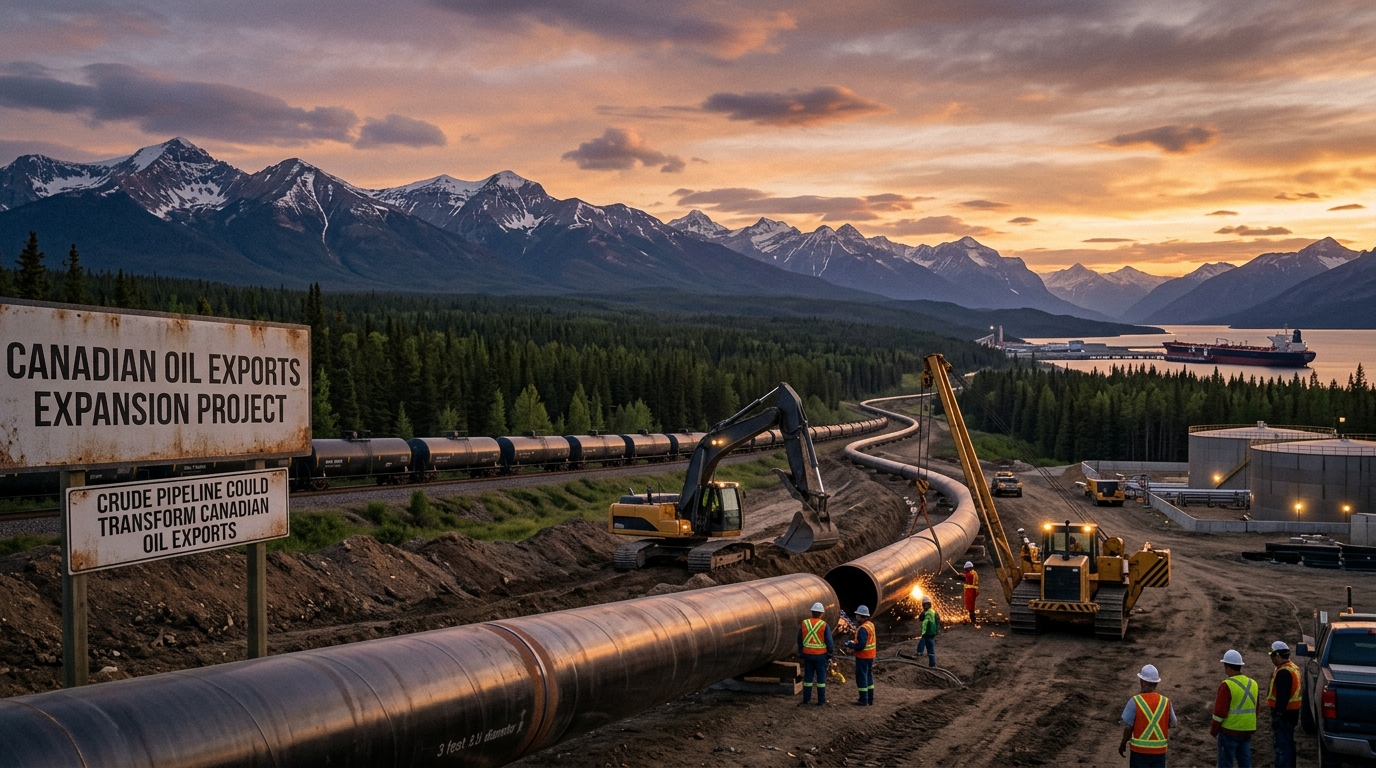
The long-running Keystone XL saga has taken a dramatic new turn after U.S. President Donald Trump signed an order authorizing a major cross-border oil project that could revive parts of the cancelled Keystone XL pipeline and significantly expand Canadian crude exports to the United States.
The new project, backed by Canadian pipeline company South Bow and U.S.-based Bridger Pipeline, is being viewed by many energy analysts as the closest thing yet to a Keystone XL revival. While the proposed pipeline will not follow the exact route of the original Keystone XL project, it would use portions of previously installed infrastructure in Canada and create a new pathway for Canadian crude to reach U.S. markets.
The decision immediately reignited debate over energy security, Canadian crude exports, Keystone XL, North American energy independence, and the future of cross-border oil infrastructure.
Trump Signs Order Authorizing Bridger Pipeline Project
President Donald Trump signed the presidential permit authorizing the proposed Bridger Pipeline project, which would transport Canadian crude across the U.S.-Canada border and connect it to existing energy infrastructure in the United States.
The project would begin near the border in Montana and extend approximately 1,038 kilometres to Guernsey, Wyoming.
During the signing ceremony at the White House, officials described the project as similar to the former Keystone XL pipeline.
Trump emphasized the economic benefits, highlighting the potential for job creation and infrastructure investment.
The order marks one of the most significant energy-related approvals since Trump returned to office and underscores his administration’s support for expanding North American oil production and transportation capacity.
How the New Pipeline Connects to Keystone XL
Although the project is not officially called Keystone XL, many industry experts see it as a partial resurrection of the controversial pipeline.
The original Keystone XL project was first proposed in 2005 and was designed to transport approximately 830,000 barrels of Canadian crude per day from Alberta to Nebraska before connecting to refineries along the U.S. Gulf Coast.
After years of legal battles, environmental protests, Indigenous opposition, and political controversy, the project was cancelled in 2021 after former President Joe Biden revoked its permit.
However, not all of the work disappeared.
Approximately 150 kilometres of pipe had already been installed in Alberta before the cancellation. Those assets remain in place and could potentially become part of the new project.
South Bow, the company evaluating the Prairie Connector expansion, is considering using some of this existing infrastructure to support future Canadian crude transportation.
As a result, many observers are describing the proposal as a practical revival of portions of Keystone XL rather than a completely new project.
Canadian Crude Exports Could Rise More Than 12 Percent
One of the most important aspects of the proposal is its potential impact on Canadian crude exports.
Industry estimates suggest the project could increase Canada’s crude exports to the United States by more than 12 percent if fully completed.
The proposed line could move approximately 550,000 barrels of Canadian crude per day into U.S. markets.
For Canadian oil producers facing growing production levels, additional export capacity remains a critical issue.
Canada continues to produce increasing volumes of oil, particularly from Alberta’s oil sands, yet pipeline bottlenecks have frequently limited access to international markets.
The new Bridger Pipeline project could provide a major new outlet for Canadian crude while strengthening North America’s integrated energy network.
South Bow Takes Center Stage After TC Energy Spin-Off
A key player behind the proposal is South Bow, a company created in 2024 when TC Energy spun off its oil pipeline operations.
South Bow inherited several important assets and infrastructure projects connected to the former Keystone system.
Company representatives have described the Prairie Connector project as an early-stage proposal that could leverage existing infrastructure and permitted corridors.
According to South Bow, the project remains under evaluation and will require extensive discussions with stakeholders, rightsholders, regulators, and commercial partners before moving forward.
Even so, Trump’s authorization provides a significant boost to the project’s prospects.
Energy Experts Say Market Conditions Support New Pipeline
Energy analysts point to several market trends that strengthen the case for additional pipeline infrastructure.
Canadian oil production continues to increase.
Global energy markets remain volatile.
Geopolitical tensions have created uncertainty around international oil transportation routes.
According to energy law experts, North America possesses a unique combination of heavy crude production, refining capacity, natural gas resources, and integrated infrastructure that could help address future energy supply challenges.
Supporters argue that additional pipeline capacity would improve energy security while reducing transportation costs associated with moving crude by rail or truck.
They also argue that reliable access to U.S. refineries remains essential for maximizing the value of Canadian crude exports.
Legal Challenges Could Still Threaten the Project
Despite Trump’s approval, the pipeline remains far from guaranteed.
The original Keystone XL project faced years of lawsuits, regulatory battles, environmental reviews, and political opposition.
Many experts expect similar legal challenges to emerge against the Bridger Pipeline proposal.
Environmental organizations have already indicated concerns about new fossil fuel infrastructure projects.
Indigenous groups may also seek consultations regarding potential impacts on land, water resources, and treaty rights.
State-level permits will still be required before construction can proceed.
As a result, even with federal authorization, the project faces a potentially lengthy regulatory process.
Canadian Industry Groups Strongly Support the Proposal
Canada’s energy sector has largely welcomed the announcement.
Industry leaders argue that Canada’s economy benefits significantly from reliable access to U.S. energy markets.
Supporters note that the United States remains the largest oil and gas consumer in the world and continues to be Canada’s most important energy customer.
Additional export capacity could improve market access, reduce pricing discounts for Canadian crude, and strengthen the country’s position as a major global energy supplier.
Industry organizations have stated that any commercially viable project capable of transporting Canadian crude safely and efficiently deserves serious consideration.
Pipeline Approval Arrives During Canada-U.S. Trade Tensions
The timing of Trump’s decision is particularly significant.
The authorization comes as Canada and the United States continue navigating trade disputes and preparing for discussions regarding a future North American trade agreement.
Energy remains one of the most important economic links between the two countries.
The new pipeline proposal highlights how deeply integrated the North American energy system has become over several decades.
Canadian crude continues to play a crucial role in supplying American refineries, while U.S. demand remains essential for Canadian producers.
The project could therefore become an important topic during broader trade and economic negotiations.
Economic Impact Could Reach Both Sides of the Border
If construction moves forward, the economic impact could be substantial.
During earlier Keystone XL construction efforts, thousands of jobs were created across western Canada and the United States.
Communities along the route benefited from worker spending, equipment purchases, accommodation demand, and local business activity.
Supporters believe the Bridger Pipeline project could generate similar economic benefits while supporting long-term energy investment.
Pipeline construction, maintenance, engineering, transportation, and related services would all likely experience increased demand.
For regions dependent on the energy sector, the project represents a potentially significant economic opportunity.
What Happens Next?
While Trump’s order provides an important green light, several major hurdles remain before the project becomes reality.
Bridger Pipeline must continue advancing engineering and planning work.
State regulatory approvals must be secured.
Environmental reviews may still be required.
Stakeholder and Indigenous consultations will need to continue.
Commercial agreements must also demonstrate that sufficient demand exists to justify the investment.
For now, however, the project has gained significant momentum.
After years of uncertainty surrounding Keystone XL, the dream of a major new Canadian crude export corridor is once again alive.
Whether the Bridger Pipeline ultimately succeeds or faces the same obstacles that stopped Keystone XL remains to be seen. What is certain is that Trump’s authorization has reopened one of North America’s most consequential energy debates, placing Canadian crude exports, Keystone XL infrastructure, and cross-border energy security back at the center of the political and economic conversation.