Province Commits Millions to Advance New Reactors at Bruce Power Site
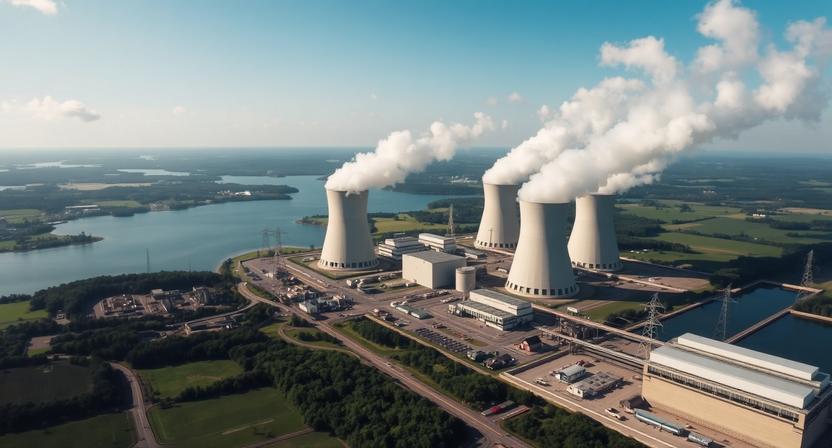
Ontario is making one of its strongest commitments yet to the future of nuclear energy, announcing a major funding agreement to accelerate plans for the proposed Bruce C nuclear expansion project near Kincardine. The province will share up to $300 million in pre-development costs as Bruce Power moves forward with plans to construct four additional nuclear reactors at its existing site on Lake Huron.
The announcement signals Ontario’s determination to expand long-term electricity generation capacity as energy demand continues to rise across the province. Provincial officials say the project could reshape Ontario’s energy future while delivering major economic and employment benefits for decades.
According to Ontario Energy and Mines Minister Stephen Lecce, the proposed expansion would support nearly 18,900 jobs during development and construction while creating more than 6,000 permanent positions once operational.
Officials also estimate the project could contribute approximately $230 billion to Canada’s economy over the next 80 years.
Related: Canada New Massive Solar Farm Proposal Could Deliver 150 MW of Clean Energy
Bruce C Would Be Ontario’s First Large Nuclear Build in Decades
Bruce Power formally launched the federal approval process for the Bruce C project in 2024, proposing the first large-scale nuclear construction project in Ontario in more than thirty years.
The expansion would add up to 4,800 megawatts of electricity generation capacity, enough to power nearly five million homes. Provincial leaders argue that additional electricity generation will be essential as Ontario experiences rapid population growth, industrial expansion, and increasing electrification.
Ontario’s long-term energy strategy projects significant increases in electricity demand by the 2050s, especially as electric vehicles, advanced manufacturing, and data centres continue to expand across the province.
Bruce Power executives say the existing Bruce site is one of the most suitable locations in Canada for new nuclear development because of its established infrastructure, skilled workforce, and operational history.
What the $300 Million Funding Will Support
Although the Bruce C proposal is still awaiting federal environmental and regulatory approvals, Ontario is funding early-stage work intended to speed up planning and preparation.
The shared funding agreement will support several critical areas, including:
Site Planning and Engineering
Preliminary site design and engineering work will help determine reactor placement, infrastructure requirements, and overall project feasibility.
Community Consultation
Bruce Power and local municipalities will continue consultations with nearby communities and Indigenous groups as part of the planning process.
Technology Selection
Officials are still evaluating which reactor technology would be used for the expansion project.
Environmental and Cooling Water Studies
Detailed assessments will examine environmental impacts, including cooling water strategies and long-term sustainability considerations.
Provincial officials hope the early investment will position the project for faster implementation if federal approvals are granted later this decade.
Local Communities Preparing for Major Growth
A portion of the funding will also help surrounding municipalities prepare for the enormous economic and population impacts expected from the project.
Communities across Bruce, Grey, and Huron counties are already assessing what additional infrastructure may be required to support thousands of workers and long-term residents.
Local governments are studying potential demands related to:
Housing Development
Thousands of temporary and permanent workers would likely increase housing demand throughout the region.
Healthcare Services
Hospitals and healthcare systems may require expansion to serve a larger population.
Roads and Infrastructure
Transportation systems, utilities, and municipal services may need major upgrades.
Workforce Development
Training and workforce planning initiatives are expected to become increasingly important as the nuclear sector grows.
Bruce Power President and CEO Eric Chassard said municipalities need time and financial support to prepare for a project of this magnitude.
Regional leaders have largely welcomed the province’s investment, saying it provides confidence for future planning while supporting economic growth across southwestern Ontario.
Strong Regional Support for Nuclear Expansion
Public support for the Bruce C proposal appears high throughout the surrounding region.
A recent Ipsos poll found that 91 percent of residents in Bruce, Grey, and Huron counties believe the project would positively benefit their communities.
Supporters argue the expansion would strengthen Ontario’s clean energy supply while creating stable, high-paying jobs in both construction and operations.
Ontario continues to position nuclear power as a cornerstone of its clean energy strategy, emphasizing that nuclear generation produces electricity with very low greenhouse gas emissions compared to fossil fuels.
Saugeen Ojibway Nation Raises Concerns Over Consultation Process
Despite strong regional backing, the project continues to face concerns from the Saugeen Ojibway Nation.
Leaders from the Chippewas of Saugeen First Nation and the Chippewas of Nawash Unceded First Nation say they remain concerned about whether their right to free, prior, and informed consent is being fully respected before the project advances further.
In a joint statement, Indigenous leadership said they are working to ensure Bruce Power and governments remain accountable throughout the consultation and assessment process.
The federal impact assessment process requires extensive consultation with Indigenous communities, environmental reviews, and public engagement before any final approval decision can be made.
Bruce Power officials say ongoing engagement with the Saugeen Ojibway Nation remains central to the project’s development strategy.
Company executives say they hope to reach agreements that address environmental concerns while ensuring long-term benefits for Indigenous and surrounding communities.
Federal Approval Process Could Continue Until 2028
The Bruce C project still faces several years of regulatory review before construction could begin.
Federal impact assessments are expected to continue until at least 2028. Pre-development activities could continue through 2029 or 2030.
If approvals are ultimately granted around 2030, Bruce Power estimates:
Three Years of Site Preparation
Initial groundwork and infrastructure preparation would likely begin immediately following approvals.
Up to Fourteen Years of Construction and Commissioning
The full construction timeline for the reactors and related systems could extend well into the 2040s.
The lengthy timeline reflects the enormous scale and complexity of large nuclear infrastructure projects.
Ontario Betting Big on Nuclear Energy Future
The Bruce C proposal reflects Ontario’s broader strategy to dramatically expand electricity generation over the coming decades.
As electricity demand rises, the province is increasingly relying on nuclear power to provide stable, large-scale, low-emission energy generation capable of supporting economic growth and electrification goals.
If completed, Bruce C would become one of the largest nuclear infrastructure projects in Canadian history and could play a major role in Ontario’s energy system for generations.
Government Sources
For more information, readers can visit official Government of Ontario and federal resources:
Government of Ontario Energy Policy Information