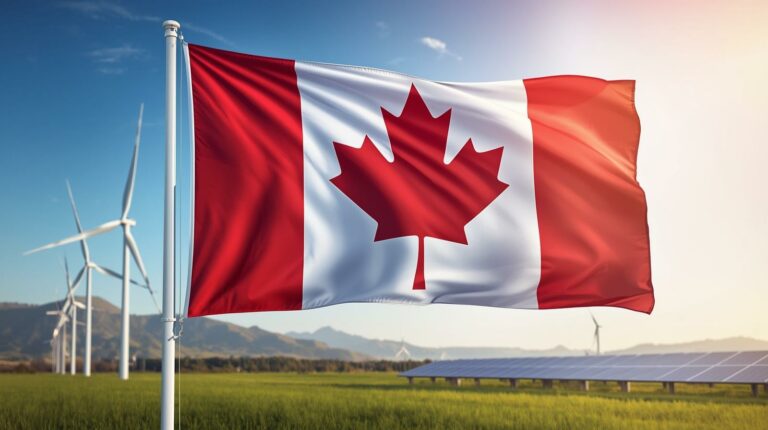
Canada has set one of its most ambitious climate goals yet: to achieve a net-zero electricity grid by 2035. This clean electricity target is a cornerstone of the country’s strategy to cut greenhouse gas emissions and reach net-zero by 2050. But what does this deadline really mean for provinces, utilities, and everyday Canadians? Here’s a detailed look at how the 2035 clean electricity target will shape policy, infrastructure, and consumer costs across the nation.
Canada Hydrogen Push: How Green Hydrogen Could Transform Our Energy Mix by 2035
Understanding Canada’s 2035 Clean Electricity Target
The federal government’s Clean Electricity Regulations (CER) aim to ensure that Canada’s electricity generation is net-zero by 2035. This means that all electricity produced across the country will have to be generated from non-emitting sources—such as hydro, wind, solar, and nuclear—or offset by technologies like carbon capture and storage (CCS).
This target is not just about climate change. A clean grid is also central to electrifying transportation, heating, and industry, which will require Canada’s electricity supply to double or even triple by mid-century.
Key goals include:
- 100% clean or net-zero power by 2035, with limited allowances for natural gas only when paired with carbon capture.
- A stable and affordable energy transition to protect consumers from price shocks.
- Building the foundation for Canada’s 2050 net-zero economy.
Why 2035 Is a Critical Milestone
2035 is strategically chosen because it aligns with Canada’s broader climate commitments:
- The Paris Agreement calls for deep emission cuts by 2030 and net-zero by 2050.
- Major sectors—transport, manufacturing, and buildings—are rapidly electrifying.
- Investments in renewable energy are accelerating worldwide, and Canada seeks to stay competitive.
A clean electricity grid by 2035 will provide the backbone for decarbonizing other industries and give Canada a competitive edge in attracting green investment.
How Provinces Will Adapt: Regional Challenges and Opportunities
Canada’s provinces have very different energy mixes, meaning the path to 2035 will vary widely.
Hydro-Rich Provinces: Quebec, Manitoba, and British Columbia
These provinces already generate over 90% of their electricity from hydroelectric power, giving them a head start. Their challenge lies in expanding capacity and upgrading transmission lines to export clean electricity to other regions.
Ontario: Nuclear Power as a Bridge
Ontario’s electricity mix is dominated by nuclear and hydro, making it well-positioned to meet the 2035 goal. However, it will need to invest in new small modular reactors (SMRs) and renewable projects to replace aging infrastructure and rising demand.
Alberta and Saskatchewan: Transitioning from Fossil Fuels
These provinces still rely heavily on natural gas and coal. They face the steepest transition, needing large-scale investments in wind, solar, carbon capture, and grid interconnections with neighboring provinces to meet the target.
Atlantic Canada: Harnessing Wind and Hydro
Nova Scotia and New Brunswick are turning to offshore wind, hydro imports from Quebec, and tidal energy pilots to clean up their grids. The federal Atlantic Loop project aims to link eastern provinces with Quebec’s hydro power.
Major Investments and Federal Incentives
To help provinces and utilities reach the 2035 goal, Ottawa is offering a range of funding and incentives:
- Clean Electricity Investment Tax Credit (2024): Covers up to 30% of capital costs for new renewable and grid projects.
- Canada Infrastructure Bank: Financing large-scale interprovincial transmission projects like the Atlantic Loop.
- Carbon pricing: Driving utilities to shift away from fossil-fuel generation.
- Support for Indigenous-led projects: Ensuring equitable participation and economic benefits.
These programs aim to attract tens of billions of dollars in private investment to expand renewable capacity and modernize Canada’s grid.
Impact on Electricity Consumers
A major question for households and businesses is how the clean electricity transition will affect electricity bills. The answer is complex:
Short-Term Costs
- Building new infrastructure—wind farms, solar arrays, transmission lines—requires large upfront investments.
- Some provinces may see modest rate increases in the next decade as projects are built.
Long-Term Savings
- Renewable energy sources like wind and solar have near-zero fuel costs, meaning prices stabilize over time.
- A clean grid protects consumers from volatile natural gas prices and future carbon penalties.
Federal modeling suggests that while electricity prices may rise slightly in the 2020s, the shift to clean power will lead to lower and more predictable energy costs in the 2030s and beyond.
Technological Innovations Driving the Transition
Canada’s 2035 target relies on scaling up clean energy technologies:
- Wind and Solar Expansion: Expected to account for the largest share of new generation capacity.
- Battery Storage and Hydrogen: Balancing intermittent renewables and providing backup during peak demand.
- Small Modular Reactors (SMRs): Offering a reliable zero-emission baseload power option, particularly in Ontario and New Brunswick.
- Smart Grids and AI: Modernizing the grid for better efficiency and resilience.
Economic and Environmental Benefits
The clean electricity target is expected to generate tens of thousands of jobs in construction, engineering, and renewable energy operations. It will also:
- Cut greenhouse gas emissions by up to 80 megatonnes annually.
- Attract foreign investment from industries seeking low-carbon electricity.
- Enhance Canada’s energy security and reduce dependence on imported fossil fuels.
Challenges to Achieving the Goal
Despite strong policy support, Canada faces significant hurdles:
- Permitting Delays: Large-scale energy projects often face regulatory and community approval challenges.
- Transmission Bottlenecks: Interprovincial grid connections must be expanded to share clean energy across regions.
- Skilled Labor Shortage: The clean energy workforce needs rapid training and expansion.
- Political and Regional Tensions: Provinces differ in their pace of adoption and willingness to comply with federal regulations.
Meeting the 2035 deadline will require close federal-provincial collaboration and long-term investment planning.
What Canadians Can Expect by 2035
If Canada successfully hits its clean electricity target, Canadians will experience:
- Cleaner air and reduced health impacts from fossil fuel pollution.
- A more stable and resilient power grid with less vulnerability to global fuel price shocks.
- Increased electrification of vehicles, home heating, and industry, lowering overall household emissions.
- Opportunities for provinces to export clean power to the United States and other markets.
The Road Ahead: Policy, Partnerships, and Innovation
To reach the 2035 goal, Canada must:
- Continue to expand renewable and nuclear capacity.
- Build interprovincial transmission corridors to share clean energy efficiently.
- Provide stable, long-term funding and clear regulatory pathways.
- Foster partnerships with Indigenous communities and private investors.
With the right mix of policy, technology, and collaboration, Canada can deliver a net-zero electricity grid that supports economic growth and environmental protection.
Canada’s 2035 clean electricity target is more than just a climate policy—it is the backbone of the country’s net-zero economy. For provinces, it means major investments and infrastructure upgrades. For consumers, it promises a future of reliable, affordable, and low-carbon electricity. Though the road is challenging, the benefits of cleaner air, economic opportunity, and energy security make the 2035 goal not just achievable but essential to Canada’s sustainable future.