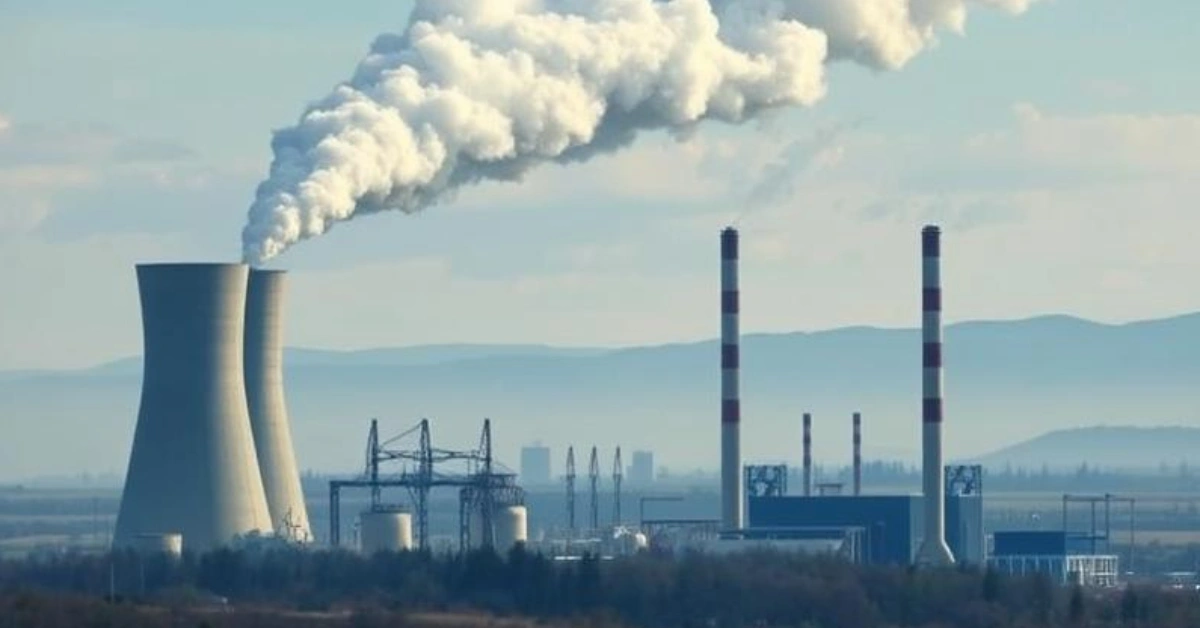
As global temperatures climb and pressure mounts to meet net-zero targets by mid-century, industries from steelmaking to cement production face a difficult challenge: how to cut carbon emissions from processes that are notoriously hard to decarbonize. While renewable energy and electrification have made strides in the power and transportation sectors, heavy industry remains one of the toughest frontiers.
Enter Carbon Capture 2.0—the next generation of carbon capture, utilization, and storage (CCUS) technologies. These innovations promise to make capturing and storing CO₂ cheaper, more efficient, and scalable, potentially transforming industrial emissions from an intractable problem into an opportunity for sustainable growth.
How Climate Change Threatens Hydropower Reliability and Cross-Border Electricity Trade
The Industrial Emissions Problem: Why Carbon Capture Still Matters
Industrial sectors such as cement, steel, chemicals, and oil refining collectively account for roughly 25% of global greenhouse gas emissions. Unlike power plants, many of these processes release process-related CO₂—emissions that occur from chemical reactions, not just from burning fuel.
For example:
- Cement production emits CO₂ when limestone is converted to lime, independent of the energy source.
- Steelmaking traditionally uses coke (derived from coal) to reduce iron ore, producing unavoidable CO₂.
Even with electrification and renewable energy, these industries will continue to generate hard-to-abate emissions. Carbon capture remains one of the few practical pathways to achieving net-zero in these sectors.
From First-Generation CCUS to Carbon Capture 2.0
The First Wave: Costly and Limited
Traditional carbon capture technologies, such as amine-based chemical absorption, have been deployed for decades in natural gas processing and some coal-fired power plants. But these systems are often energy-intensive, expensive, and complex to operate, limiting widespread adoption.
The Next Generation: Faster, Cheaper, Smarter
Carbon Capture 2.0 represents a leap forward. Researchers and companies are developing novel materials, modular systems, and integrated processes designed to slash costs, increase capture rates, and enable flexible deployment across diverse industries.
Breakthrough Technologies Powering Carbon Capture 2.0
1. Advanced Solvents and Sorbents
New chemical solvents and solid sorbents are more selective and less energy-intensive than traditional amines.
- Metal-Organic Frameworks (MOFs): These nano-porous materials can trap CO₂ molecules with exceptional efficiency and require less energy to regenerate.
- Advanced Amines and Ionic Liquids: Next-generation liquid solvents promise faster CO₂ absorption and lower heat requirements.
2. Membrane-Based Capture
Innovative polymer and ceramic membranes can selectively separate CO₂ from flue gases.
- No need for chemical solvents, reducing operational complexity.
- Potential for modular installations directly at industrial stacks.
- Lower maintenance costs compared to traditional systems.
3. Cryogenic Carbon Capture
Cryogenic processes cool exhaust gases to very low temperatures, causing CO₂ to condense and separate.
- Particularly effective for high-purity CO₂ streams, such as those from natural gas processing.
- Can integrate with existing industrial refrigeration systems.
4. Direct Air Capture (DAC) Hybrids
While DAC is primarily designed to pull CO₂ from ambient air, hybrid systems can be adapted for industrial sites to capture both point-source emissions and surrounding ambient CO₂.
- Allows facilities to offset residual emissions while cleaning nearby air.
- Can feed captured CO₂ into utilization pathways.
5. Bioenergy with Carbon Capture and Storage (BECCS)
By coupling biomass energy generation with carbon capture, BECCS systems create negative emissions—removing more CO₂ from the atmosphere than they emit.
- Ideal for pulp and paper mills or biofuel plants.
- Offers a dual benefit of renewable energy production and carbon removal.
Turning Captured Carbon into Valuable Products
Carbon Capture 2.0 is not just about storage; it’s about carbon utilization. Emerging technologies are converting captured CO₂ into valuable products, creating new revenue streams:
- Synthetic Fuels: CO₂ combined with green hydrogen to produce carbon-neutral aviation and shipping fuels.
- Building Materials: Carbon-infused concrete and aggregates lock CO₂ into long-lasting infrastructure.
- Chemicals and Plastics: CO₂-derived chemicals can replace fossil-based feedstocks in plastics and fertilizers.
This “carbon-to-value” approach makes CCUS economically attractive, encouraging industries to view CO₂ as a resource rather than waste.
Scaling Up: Policy, Investment, and Market Drivers
Global Policy Momentum
Governments are ramping up support through tax incentives and funding programs:
- The U.S. Inflation Reduction Act offers enhanced 45Q tax credits, paying up to $85 per ton of CO₂ permanently stored.
- Canada’s Investment Tax Credit for CCUS covers up to 60% of project capital costs.
- The EU’s Net-Zero Industry Act aims to streamline permitting for CCUS projects.
Private-Sector Investment
Major industrial players—ArcelorMittal, Shell, Lafarge, and ExxonMobil—are investing billions in pilot projects and commercial-scale facilities. Venture capital is flowing into startups developing advanced sorbents, membranes, and utilization technologies.
Challenges and Risks Ahead
Despite the promise of Carbon Capture 2.0, significant hurdles remain:
- High Upfront Costs: Even with tax credits, large-scale deployment requires significant capital investment.
- Infrastructure Needs: Pipelines and storage sites for CO₂ must expand rapidly to handle captured volumes.
- Monitoring and Regulation: Long-term storage integrity demands rigorous monitoring to prevent leaks.
- Public Perception: Some environmental advocates worry CCUS could prolong reliance on fossil fuels.
Overcoming these challenges will require coordinated government action, private investment, and public engagement.
Industrial Case Studies Leading the Way
Steelmaking in Europe
ArcelorMittal’s pilot projects in Belgium and Spain use new sorbent technologies to capture emissions from blast furnaces, turning CO₂ into bioethanol.
Cement Production in Canada
Lafarge’s Richmond plant in British Columbia is testing membrane-based carbon capture to address process emissions—one of the hardest sectors to decarbonize.
Oil and Gas in the U.S.
ExxonMobil’s Houston CCS hub aims to capture and store up to 100 million metric tons of CO₂ annually by 2040, partnering with multiple industrial emitters.
These projects demonstrate how Carbon Capture 2.0 is already moving from laboratory research to real-world deployment.
The Path Forward: Carbon Capture as a Cornerstone of Net Zero
Carbon Capture 2.0 is no longer an experimental concept; it is becoming a critical pillar of global climate strategy. By combining breakthrough science, government incentives, and industrial collaboration, these next-generation technologies can:
- Slash emissions from hard-to-abate sectors.
- Create new markets for CO₂-based products.
- Support global efforts to limit warming to 1.5°C.
While no single technology can solve the climate crisis, Carbon Capture 2.0 offers a powerful bridge between today’s carbon-intensive industries and a truly sustainable, net-zero future.
The industrial revolution powered human progress but left a legacy of carbon pollution. With Carbon Capture 2.0, that liability can be transformed into an economic and environmental asset. By capturing, storing, and even reusing carbon emissions, these breakthrough technologies provide a scalable path to deep decarbonization, giving heavy industry a chance to thrive in the low-carbon economy of tomorrow.