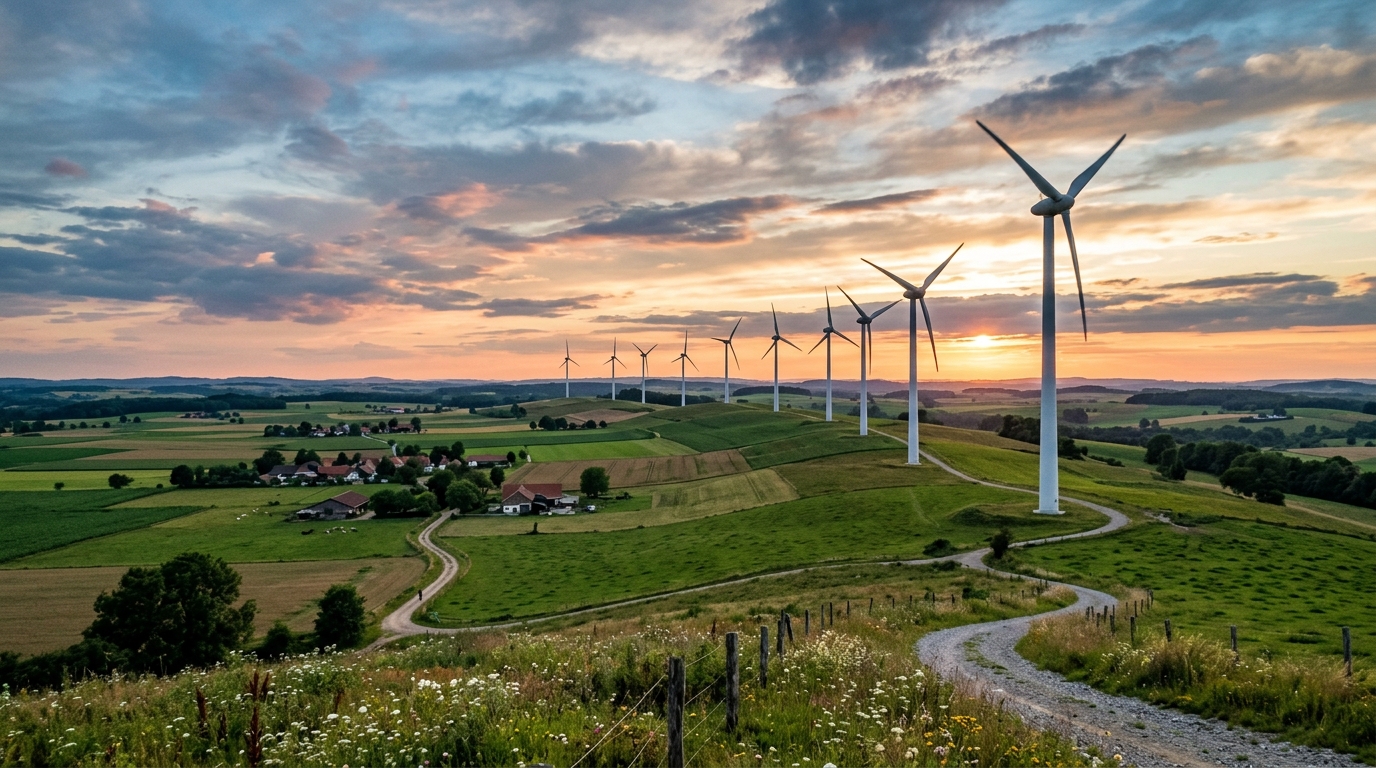
Canada offshore wind development has reached a major milestone after the federal government and the Province of Nova Scotia announced the first group of companies prequalified to compete for the country’s inaugural offshore wind leases. The announcement represents one of the biggest steps yet in Canada’s clean energy transition and reinforces Nova Scotia’s ambition to become a global offshore wind powerhouse.
The Canada-Nova Scotia Offshore Energy Regulator (CNSOER) revealed that five developers and consortiums have successfully met the strict prequalification requirements, allowing them to participate in the upcoming offshore wind auction later this year. The move signals growing international confidence in Canada offshore wind opportunities and highlights Nova Scotia’s potential to become one of North America’s leading renewable energy hubs.
With plans to license up to 5 gigawatts (GW) of offshore wind capacity by 2030 and ambitions to eventually produce as much as 50 GW by 2050, Canada offshore wind is rapidly emerging as one of the country’s most important long-term energy investments.
Canada Offshore Wind Program Reaches Historic Milestone
The latest announcement marks the first major competitive step toward launching Canada’s offshore wind industry.
The Canada-Nova Scotia Offshore Energy Regulator, an independent agency jointly established by the federal government and the Province of Nova Scotia, completed an extensive review process to determine which companies were qualified to move forward.
The regulator evaluated applicants based on several important factors, including:
- Financial strength
- Technical expertise
- Legal qualifications
- Environmental and social responsibility
- Experience delivering large-scale energy projects
Only companies capable of managing complex offshore wind developments were selected for the next phase.
Nova Scotia Premier Tim Houston described the announcement as a significant achievement for both the province and Canada’s clean energy future.
According to Houston, attracting experienced international developers demonstrates that Nova Scotia is becoming one of the world’s most attractive locations for offshore wind investment.
International Offshore Wind Leaders Join Canada’s First Auction
The list of prequalified participants includes several globally recognized offshore wind developers with decades of experience constructing renewable energy projects around the world.
Among the companies moving to the bidding stage are:
- DEME of Belgium
- Jan De Nul of Luxembourg
- Ming Yang of China
In addition, two consortiums were also prequalified, including one partnership featuring Hanwha Ocean alongside Q Energy France.
The Canada-Nova Scotia Offshore Energy Regulator also noted that companies were permitted to keep their participation confidential during this phase, meaning additional qualified developers may still be involved behind the scenes.
The presence of internationally respected offshore wind companies demonstrates growing confidence in Canada’s offshore wind potential.
These firms have collectively developed numerous offshore renewable energy projects across Europe and Asia, bringing valuable expertise that could accelerate Canada’s offshore wind industry.
Nova Scotia Positions Itself as Canada’s Offshore Wind Leader
Nova Scotia has long been viewed as one of Canada’s strongest candidates for offshore wind development due to its powerful Atlantic winds, deep-water ports, skilled workforce, and proximity to major North American energy markets.
The province believes offshore wind can become one of its largest economic growth sectors over the coming decades.
Unlike traditional electricity generation that primarily serves local demand, Nova Scotia envisions becoming an energy exporter capable of supplying renewable electricity to neighboring regions.
Premier Tim Houston has repeatedly emphasized that offshore wind represents an enormous economic opportunity extending far beyond electricity generation.
New investments could support:
- Manufacturing facilities
- Port infrastructure
- Marine construction
- Engineering services
- Shipbuilding
- Long-term maintenance jobs
- Supply chain expansion
Officials believe thousands of skilled jobs could eventually be supported by Canada’s offshore wind sector.
Four Offshore Wind Lease Areas Already Identified
Canada’s first offshore wind leasing areas were officially designated in July 2025.
The government selected four priority development zones located off the coast of Nova Scotia.
The designated offshore wind areas include:
Middle Bank
Located approximately 25 kilometers offshore, Middle Bank offers water depths suitable for traditional fixed-bottom offshore wind turbines.
Sable Island Bank
Also positioned around 25 kilometers from shore, Sable Island Bank provides another attractive location for large-scale fixed-foundation wind farms.
Sydney Bight
Sydney Bight represents another fixed-bottom offshore wind opportunity capable of supporting significant renewable electricity generation.
French Bank
French Bank differs from the other sites because it lies in much deeper waters approximately 20 kilometers offshore.
Due to these greater water depths, floating offshore wind technology may be required instead of conventional fixed-bottom foundations.
Floating wind technology is rapidly becoming one of the fastest-growing sectors within the global offshore wind industry, allowing developers to harness stronger winds farther from shore.
Provincial officials have also indicated that additional offshore wind areas remain under consideration for future leasing rounds.
Canada Plans 5 GW of Offshore Wind by 2030
The federal and provincial governments have outlined an ambitious offshore wind roadmap.
The first competitive bidding process will focus on approximately 2.5 GW of generating capacity.
Future auction rounds are expected to follow shortly afterward.
Combined, these leasing rounds aim to deliver:
- 2.5 GW during the first auction
- 5 GW of licensed offshore wind capacity by 2030
While this represents an important first step, officials say it is only the beginning.
Tim Houston’s Vision Extends to 50 GW of Offshore Wind
Perhaps the most ambitious element of Nova Scotia’s strategy is Premier Tim Houston’s long-term vision.
Currently, Nova Scotia’s peak electricity demand reaches roughly 2.4 GW.
However, Houston believes offshore wind development could eventually expand generating capacity to between 40 GW and 50 GW by 2050.
Such expansion would dramatically exceed provincial electricity needs.
Instead of simply powering Nova Scotia, offshore wind could transform the province into one of North America’s leading renewable energy exporters.
This vision would require significant investments in:
- Electricity transmission
- Offshore infrastructure
- Hydrogen production
- Export terminals
- Grid modernization
If successful, Canada offshore wind could become a major contributor to both national energy security and international clean energy markets.
United States Could Become a Key Market for Canadian Wind Power
One of the strongest opportunities for Canada’s offshore wind industry lies south of the border.
Massachusetts has been identified as a potential future customer for Canadian renewable electricity.
The northeastern United States continues searching for reliable sources of clean energy after delays affected several planned offshore wind developments.
Exporting offshore wind-generated electricity from Nova Scotia to New England could strengthen regional energy security while supporting both Canadian and American climate objectives.
Cross-border electricity trade has long been an important part of Canada’s energy sector, and offshore wind could become the next chapter in that relationship.
Offshore Wind Could Transform Nova Scotia’s Economy
Industry experts believe offshore wind development extends far beyond renewable electricity production.
Major offshore wind projects typically generate billions of dollars in investment throughout construction and operation.
Potential economic benefits include:
- Long-term employment
- Local manufacturing growth
- Increased port activity
- Higher demand for marine services
- Engineering and construction contracts
- Supply chain development
- Research and innovation opportunities
Communities across Nova Scotia could experience significant economic activity as offshore wind infrastructure expands over the coming decades.
The province’s shipbuilding expertise, experienced marine workforce, and Atlantic coastline position it well to compete in the rapidly growing global offshore wind industry.
Canada’s Offshore Wind Future Looks Increasingly Promising
The announcement of the prequalified developers marks one of the most important milestones yet for Canada offshore wind.
With internationally recognized developers preparing to compete for the country’s first offshore wind leases, Nova Scotia is moving closer to launching an entirely new clean energy industry.
As the bidding process begins later this year, governments will evaluate proposals before awarding licenses for the first offshore wind projects.
If development proceeds according to plan, Canada offshore wind could become a defining feature of the country’s renewable energy future, creating thousands of jobs, attracting billions in investment, strengthening energy exports, and helping position Nova Scotia as one of the world’s leading offshore wind destinations.
For investors, industry leaders, and renewable energy advocates alike, the next phase of Canada offshore wind development will be closely watched as the country moves from planning to building one of North America’s newest clean energy sectors.