Canada’s energy future has entered a new chapter after Ottawa unveiled an ambitious nuclear strategy that the federal government describes as the beginning of a new nuclear renaissance. The announcement has immediately reignited debate over whether expanding nuclear energy in Canada is the fastest path toward net-zero emissions or whether the country should instead prioritize wind, solar, battery storage and other renewable technologies.
Energy Minister Tim Hodgson delivered one of the strongest endorsements of Canada’s nuclear strategy in decades, arguing that nuclear power will be essential if Canada hopes to become an energy superpower while meeting climate goals. His remarks came as the federal government projected that Canada’s electricity demand could more than double by 2050 due to electrification, artificial intelligence, electric vehicles and rapidly expanding digital infrastructure.
While supporters say Canada’s nuclear renaissance represents a historic opportunity to strengthen energy security, reduce emissions and create high-paying jobs, critics argue the strategy risks diverting billions of dollars away from renewable energy projects that can be built faster and at lower cost.
The debate has quickly become one of the country’s most important conversations about the future of electricity, climate policy and economic competitiveness.
Ottawa Declares the Beginning of a New Nuclear Renaissance
The federal government has made it clear that nuclear energy will play a central role in Canada’s future electricity system.
According to Ottawa’s new strategy, the country’s electrical grid could double in size by 2050 as millions of Canadians transition away from fossil fuels toward electric vehicles, electric heating systems and cleaner industrial processes.
Government officials argue there is no credible pathway to achieving that level of electrification without significantly expanding nuclear generation.
Tim Hodgson emphasized that nuclear power offers reliable, low-carbon baseload electricity that renewable sources alone cannot consistently provide.
The government’s vision includes constructing two new large-scale nuclear reactors by 2035, expanding reactor development through 2040 and accelerating deployment of small modular reactors (SMRs) across multiple provinces.
The strategy also aims to develop Canadian-designed Generation IV microreactors capable of supplying electricity to defence installations, northern communities and remote industrial operations.
Why Canada Says Nuclear Energy Is Becoming More Important
Canada already relies heavily on clean electricity compared with many developed nations.
Hydroelectricity remains the country’s largest source of clean electricity, while nuclear power currently generates a significant share of electricity in Ontario.
However, Canada’s broader energy system continues to depend heavily on fossil fuels.
Oil, natural gas and coal still account for the majority of Canada’s total energy supply, making decarbonization one of the country’s largest long-term challenges.
As electric vehicles replace gasoline-powered cars, heat pumps replace natural gas furnaces and industries electrify production, electricity demand will continue rising sharply.
Federal projections suggest electricity generation may increase anywhere from 30 percent to more than double by 2050 depending on economic growth and climate policy.
Supporters believe this growing demand makes Canada’s nuclear strategy increasingly necessary.
Ontario Leads Canada’s Nuclear Expansion
Ontario remains the centerpiece of Canada’s nuclear ambitions.
The province already generates most of its electricity from nuclear power, supplemented by hydroelectricity, natural gas, wind and solar generation.
Ontario Power Generation’s Darlington New Nuclear Project has become the flagship project of Canada’s nuclear expansion.
The project is expected to become the first commercial small modular reactor built anywhere in the G7.
Once fully completed, four SMRs at Darlington are expected to generate approximately 1,200 megawatts of electricity, enough to power roughly 1.2 million homes.
Ontario is also exploring the possibility of developing another massive nuclear facility at Wesleyville near Port Hope, with potential capacity reaching 10,000 megawatts.
Supporters argue projects of this scale would be extremely difficult to replace entirely with wind and solar without requiring enormous land areas and extensive transmission infrastructure.
Small Modular Reactors Become the Focus of Canada’s Nuclear Renaissance
One of the biggest components of Ottawa’s nuclear strategy involves small modular reactors, commonly known as SMRs.
Unlike traditional nuclear plants, SMRs are smaller, factory-built reactors designed to reduce construction complexity while improving efficiency.
Canada hopes SMRs will serve multiple purposes.
They could supply electricity to growing urban centres, support mining operations, provide reliable energy for northern communities and strengthen electricity grids as renewable generation expands.
Ontario’s Darlington project has attracted international attention because it may become the first operational G7 SMR, positioning Canada as a global leader in next-generation nuclear technology.
Saskatchewan has also committed to developing SMRs during the 2030s, while Alberta is working with Ottawa to establish its own nuclear strategy.
Indigenous Partnerships Become a Historic Part of Canada’s Nuclear Strategy
A major milestone in Canada’s nuclear renaissance came when the federal government and Ontario announced a $700 million loan guarantee supporting participation by the Williams Treaties First Nations.
The funding will allow the seven First Nations communities to acquire an ownership stake in the Darlington New Nuclear Project.
It represents the first time Indigenous communities have become full equity partners in a Canadian nuclear project.
Community leaders described the investment as an opportunity to participate not only as rights holders but also as long-term economic partners sharing directly in project success.
Federal officials say expanding Indigenous participation will remain a cornerstone of future nuclear development across Canada.
Supporters Say Nuclear and Renewables Must Work Together
Despite the public debate, many energy experts reject the idea that nuclear and renewable energy must compete against each other.
Instead, they argue Canada’s electricity system will require a balanced mix of technologies.
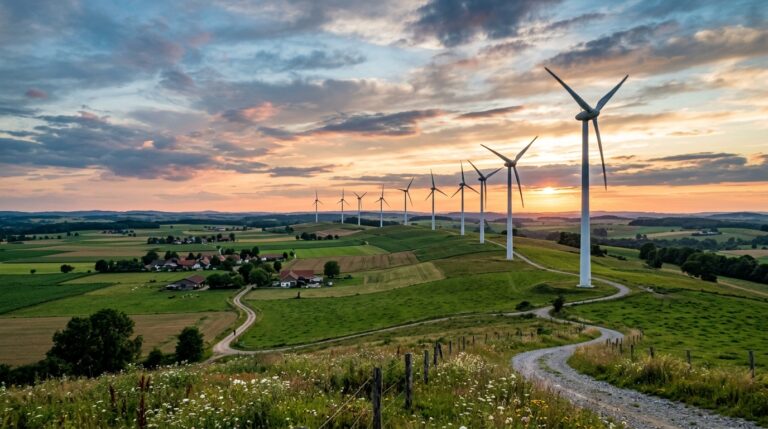
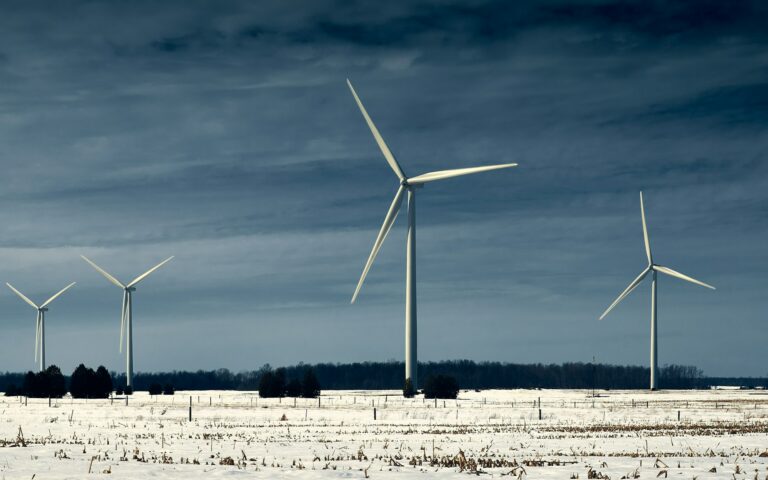
Wind and solar have become dramatically cheaper over the past decade.
Battery storage technology has also improved significantly.
Ontario recently awarded new battery storage contracts capable of supplying electricity to hundreds of thousands of homes during periods of peak demand.
Supporters of Canada’s nuclear strategy acknowledge these advances while emphasizing that renewable energy still depends heavily on weather conditions.
Wind production varies daily.
Solar generation disappears overnight.
Battery storage helps bridge those gaps but currently cannot economically provide weeks of uninterrupted electricity during prolonged periods of low renewable generation.
Nuclear plants, by contrast, operate continuously regardless of weather.
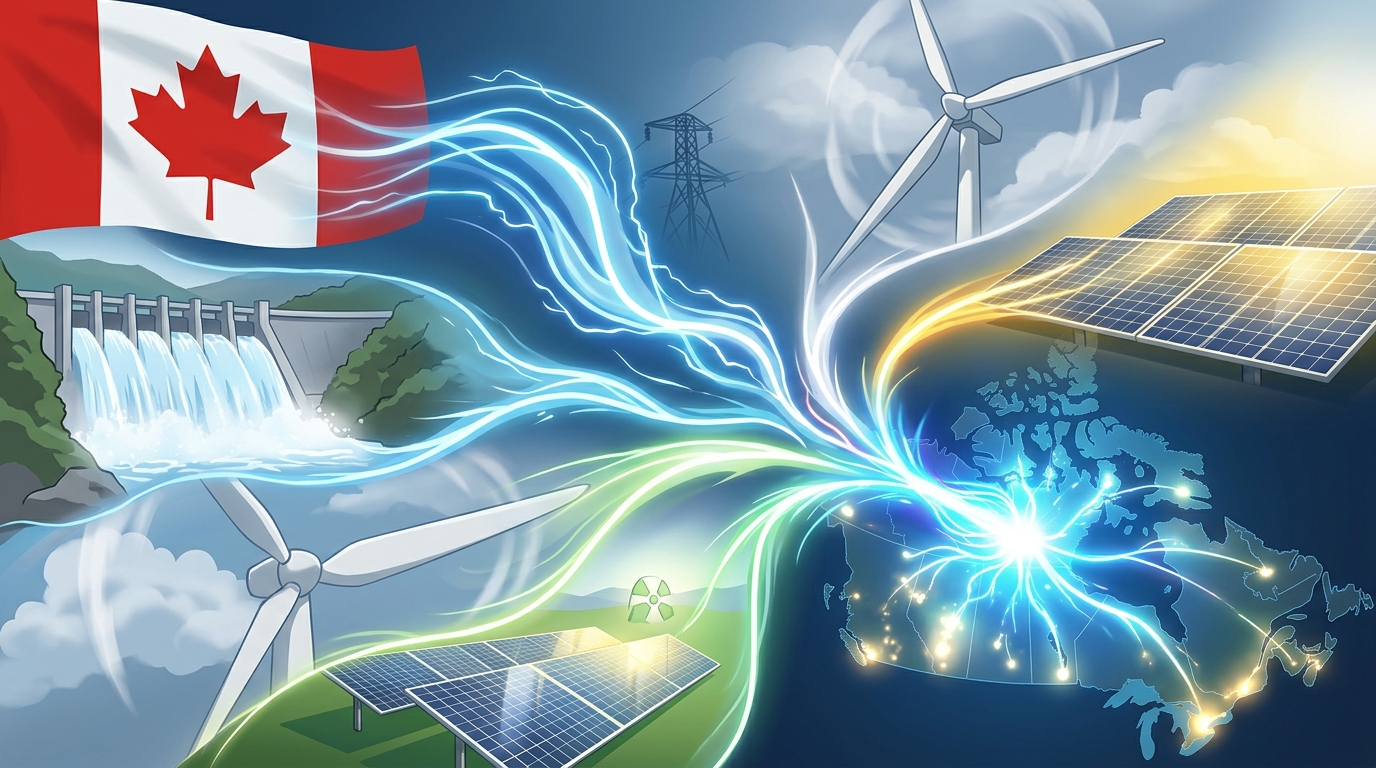
Many experts therefore believe Canada’s future electricity system will combine nuclear, hydroelectricity, wind, solar and battery storage rather than relying exclusively on any single technology.
Critics Say Canada Should Focus More on Renewable Energy
Not everyone agrees with Ottawa’s nuclear strategy.
Environmental organizations argue Canada possesses some of the world’s strongest renewable energy resources.
Large areas suitable for wind development, significant solar potential and expanding battery technologies could enable Canada to become a renewable energy leader without committing tens of billions of dollars to new reactors.
Critics also point to nuclear’s history of major construction delays and escalating costs.
Several international nuclear projects have experienced significant schedule overruns.
The Vogtle nuclear expansion in the United States finished years behind schedule and became the most expensive power project in American history.
The United Kingdom’s Hinkley Point C project has also experienced repeated delays alongside rapidly increasing construction costs.
Environmental groups worry Canada could face similar financial risks.
They argue renewable energy projects generally require less construction time and can begin reducing emissions much sooner than large nuclear facilities.
Financing Canada’s Nuclear Renaissance Remains the Biggest Question
Perhaps the largest uncertainty surrounding Canada’s nuclear strategy involves financing.
Federal estimates suggest the planned expansion could eventually require investments exceeding $100 billion.
Although Ottawa intends to introduce financing policies that include loan guarantees, green bonds and other risk-sharing mechanisms, detailed funding plans have not yet been finalized.
Investors continue watching closely because nuclear projects involve enormous upfront capital costs combined with lengthy construction periods.
Even minor supply chain disruptions can significantly increase total project costs.
Supporters believe standardized reactor designs, improved construction experience and stronger domestic supply chains could reduce those risks.
However, financing remains one of the largest unanswered questions surrounding Canada’s nuclear renaissance.
Canada Sees Economic Opportunity Beyond Electricity
The federal government views nuclear expansion as much more than an electricity policy.
Officials believe Canada already possesses a competitive nuclear supply chain developed through decades of operating CANDU reactors and refurbishing existing facilities.
Unlike solar panels and many battery components, which are largely manufactured overseas, Canada’s nuclear industry includes domestic engineering firms, specialized manufacturers and highly skilled workers.
Government officials believe expanding nuclear construction could strengthen Canada’s industrial base, support exports and create thousands of long-term jobs.
Many analysts argue that standardized reactor construction could position Canada as one of the world’s leading suppliers of advanced nuclear technology over the coming decades.
Energy Sovereignty Questions Continue to Divide Experts
One issue generating growing discussion involves energy sovereignty.
Canada’s traditional CANDU reactors operate using natural uranium, which Canada produces domestically.
However, Ontario’s planned GE-Hitachi BWRX-300 reactors require low-enriched uranium fuel.
Canada currently lacks commercial uranium enrichment facilities capable of producing this fuel.
Instead, fuel enrichment would depend primarily on facilities located in the United States and France.
Some critics argue this creates new foreign dependencies at a time when Canada is emphasizing economic resilience and energy independence.
Others counter that diversified international supply chains remain common across modern energy industries and should not undermine the broader benefits of nuclear expansion.
Canada’s Energy Future May Ultimately Require Every Available Technology
Despite sharp disagreements over the best path forward, one point enjoys broad consensus among many experts.
Canada must dramatically reduce its dependence on fossil fuels while meeting rapidly growing electricity demand.
Exactly how that transition occurs remains the subject of intense debate.
Some believe Canada’s nuclear renaissance offers the most reliable route toward a low-carbon economy.
Others argue wind, solar and battery storage can meet future demand more quickly and at lower cost.
The reality may ultimately involve both approaches.
Federal projections already suggest wind power will become the single largest source of new electricity generation through 2050, while nuclear capacity also expands substantially.
Rather than replacing renewable energy, Ottawa’s strategy positions nuclear energy in Canada as a complementary technology designed to provide reliable baseload electricity alongside rapidly growing renewable generation.
As Canada enters what officials call a new nuclear renaissance, the decisions made over the next decade will shape the country’s electricity system, climate goals, economic competitiveness and energy security for generations to come. Whether nuclear becomes the defining feature of Canada’s clean energy transition or one component of a broader renewable strategy, the debate over Canada’s nuclear strategy is only just beginning.