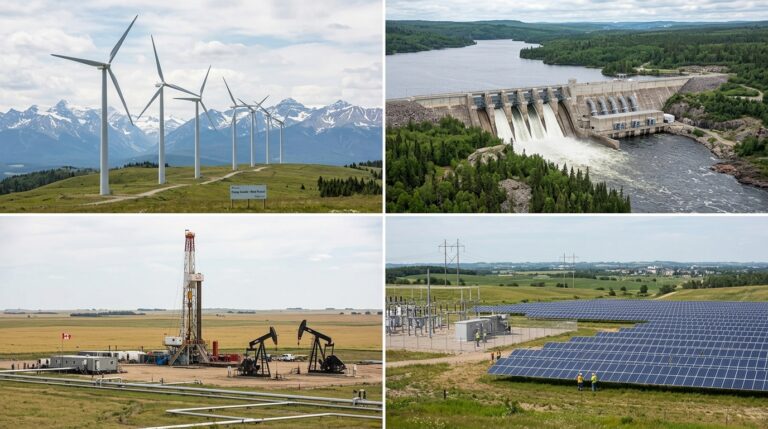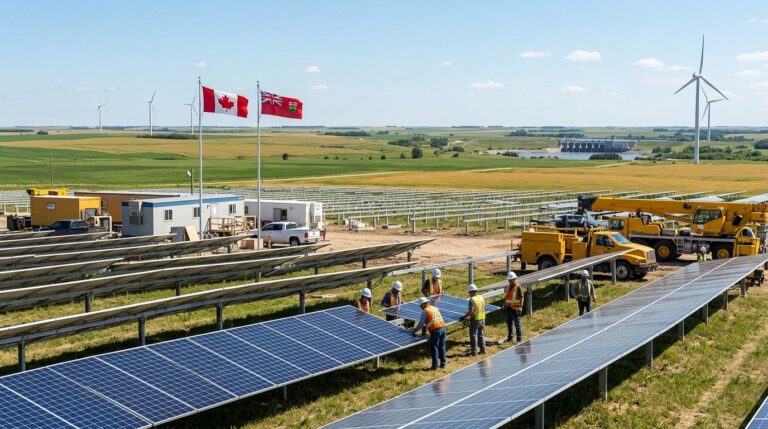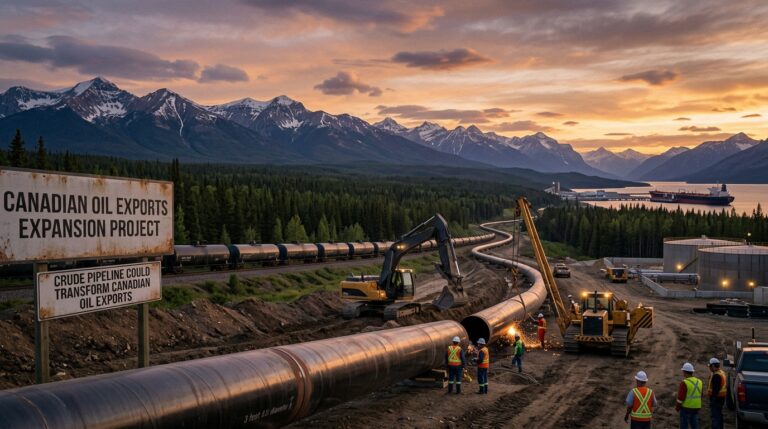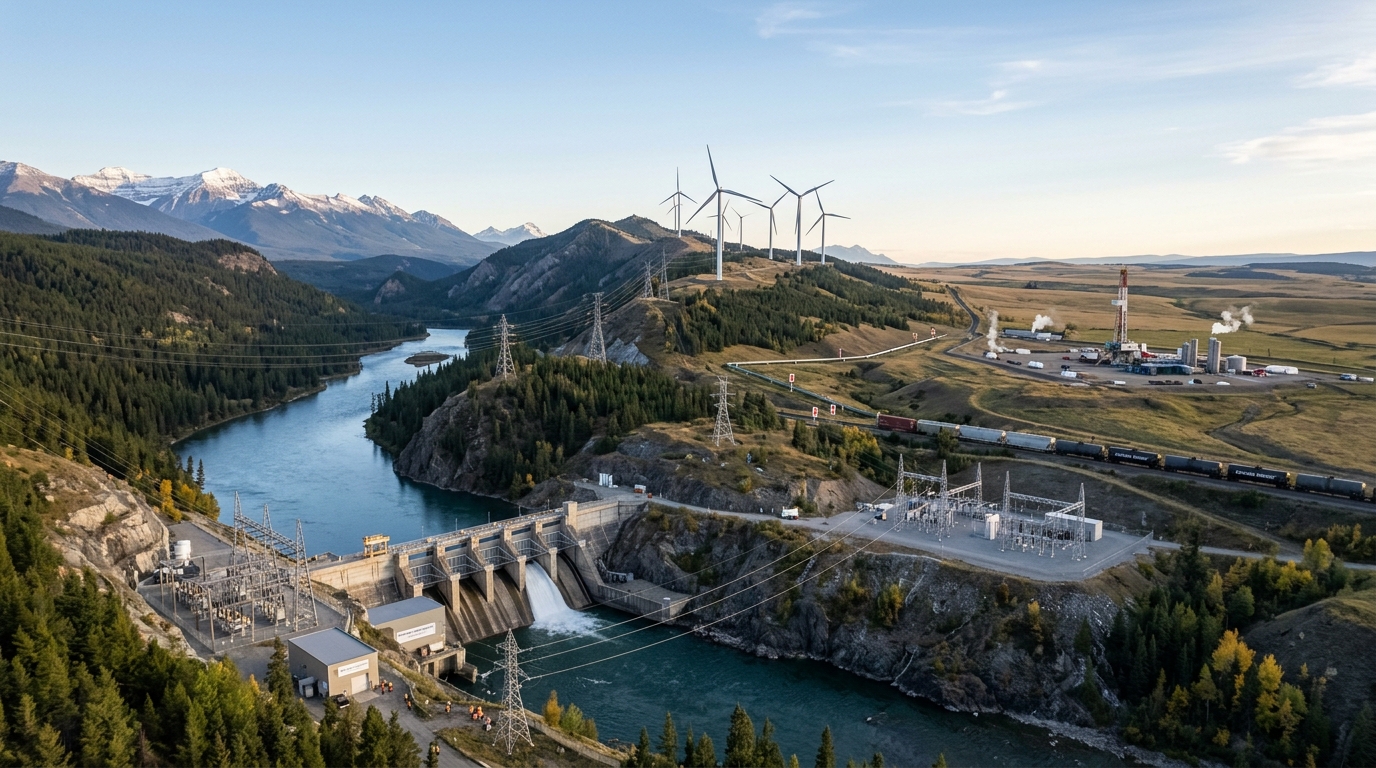
Canada is taking another major step toward becoming an energy superpower, with Minister Tim Hodgson announcing billions in long-term ambitions and nearly $90 million in new investments during the Energy and Mines Ministers’ Conference (EMMC) 2026 in Yellowknife, Northwest Territories. As the global energy crisis continues to raise concerns over affordability, energy security, and climate change, the federal government says Canada is uniquely positioned to become one of the world’s leading suppliers of energy and critical minerals.
At the heart of the announcement is a comprehensive strategy aimed at strengthening Canada’s electricity grid, expanding clean energy infrastructure, increasing critical mineral production, and enhancing national energy security. The latest commitments made at EMMC 2026 also reinforce Canada’s ambition to become a global energy superpower while supporting Indigenous partnerships, creating jobs, and building long-term economic growth.
Canada Positions Itself as an Energy Superpower During EMMC 2026
The Energy and Mines Ministers’ Conference (EMMC) 2026 brought together federal, provincial, and territorial leaders responsible for Canada’s energy and mining sectors. Hosted in Yellowknife, the annual conference focused on the theme “Securing Canada’s Critical Mineral and Energy Advantage.”
During the conference, Minister Tim Hodgson emphasized that Canada has reached a defining moment.
With global energy markets facing unprecedented instability due to geopolitical conflicts, supply chain disruptions, and growing electricity demand, Canada believes its vast natural resources provide an opportunity to become a dependable supplier of oil, natural gas, liquefied natural gas (LNG), electricity, uranium, nickel, cobalt, lithium, and dozens of other critical minerals.
According to the federal government, building Canada into an energy superpower requires coordinated action across every province and territory.
Tim Hodgson Announces More Than $16 Million for Clean Energy Projects
One of the most significant announcements during EMMC 2026 was over $16 million in funding for clean energy infrastructure projects across British Columbia, Yukon, and the Northwest Territories.
The investments are intended to:
- Expand regional clean energy infrastructure.
- Improve electricity reliability.
- Strengthen energy security.
- Reduce greenhouse gas emissions.
- Create new employment opportunities.
- Improve long-term affordability for consumers.
The federal government says these projects will help communities transition toward cleaner electricity while maintaining reliable power supplies.
Officials also noted that strengthening regional electricity systems is essential as Canada continues electrifying transportation, manufacturing, and residential heating.
National Electricity Strategy Aims to Double Canada’s Grid by 2050
One of the biggest long-term initiatives highlighted during EMMC 2026 is Canada’s upcoming National Electricity Strategy.
Previously announced by Prime Minister Mark Carney, the strategy aims to double Canada’s electricity generation capacity by 2050.
The government says achieving this goal will require unprecedented investments in electricity generation, transmission infrastructure, and provincial interconnections.
During the conference, Minister Tim Hodgson advanced discussions around Powering Canada Strong: A National Strategy for an Electrified Canadian Economy, which identifies priority infrastructure projects needed to modernize Canada’s electricity system.
Federal and provincial ministers identified five priority electricity interties that will improve power sharing between provinces and territories.
Improved electricity interties are expected to:
- Increase grid reliability.
- Lower electricity costs.
- Improve energy security.
- Expand access to renewable electricity.
- Reduce dependence on imported energy during emergencies.
These projects form a key part of Canada’s broader energy superpower strategy.
Canada Strengthens Energy Security Amid Global Energy Crisis
A central message throughout EMMC 2026 was that energy security is national security.
Global instability, particularly conflict affecting international energy markets, has demonstrated the importance of maintaining secure domestic energy supplies.
Federal, provincial, and territorial governments agreed to work together on several priorities, including:
- Identifying vulnerabilities within Canada’s energy infrastructure.
- Improving emergency response coordination.
- Expanding domestic biofuel production.
- Enhancing information sharing between jurisdictions.
- Increasing electricity system resilience.
- Supporting infrastructure capable of withstanding future disruptions.
These measures aim to reduce Canada’s exposure to international energy shocks while improving long-term reliability.
Canada Invests $73 Million to Unlock Critical Minerals
Another major announcement from EMMC 2026 involves up to $73 million in funding to strengthen Canada’s critical minerals industry.
Critical minerals have become one of the world’s fastest-growing strategic industries because they are essential for manufacturing electric vehicles, batteries, renewable energy technologies, defense equipment, semiconductors, and advanced electronics.
The new investment will support:
- Sustainable mining projects.
- Indigenous leadership within the mining sector.
- Transportation infrastructure.
- Processing facilities.
- Resource development.
- Access to international markets.
The government believes expanding domestic mining capacity will strengthen Canada’s economic competitiveness while reducing global dependence on less stable suppliers.
Canadian Digital Core Library Will Modernize Mining Exploration
One of the most innovative initiatives announced at EMMC 2026 is the development of the Canadian Digital Core Library.
Natural Resources Canada will invest up to $15 million to build a nationwide digital platform containing geological drill core data.
Currently, geological information remains scattered across provincial governments, mining companies, and territorial agencies.
The new digital platform aims to centralize this information, making exploration faster and more efficient.
The government has already signed memoranda of understanding and letters of intent with ten provinces and territories while partnering with six major mining companies.
Officials expect the Digital Core Library to:
- Improve geological research.
- Accelerate mineral exploration.
- Encourage private investment.
- Reduce duplication.
- Support responsible resource development.
The initiative is expected to become one of Canada’s most important mining modernization projects.
Canada’s Critical Minerals Industry Continues to Expand
Canada already ranks among the world’s leading producers of critical minerals.
According to government data:
- Canada produces more than 60 minerals and metals.
- The country currently identifies 34 official critical minerals.
- Canada ranks among the top five global producers of 11 critical minerals, including uranium, nickel, cobalt, aluminum, potash, palladium, helium, platinum, indium, tellurium, and niobium.
As of May 2026:
- Canada has 59 operating critical mineral mines and wells.
- There are 31 processing facilities currently operating.
- Approximately 170 advanced critical mineral projects are under development.
- More than 109,000 Canadians work within the mining sector.
- Roughly 17,000 Indigenous workers are employed throughout Canada’s mining industry.
These numbers demonstrate why critical minerals remain central to Canada’s energy superpower ambitions.
Canada Continues Breaking Oil Production Records
While clean energy remains a major focus, Canada’s conventional energy industry also continues expanding.
The federal government reported that crude oil production reached a record 5.4 million barrels per day during 2025, making Canada the fourth-largest oil producer in the world.
Canada now supplies approximately 7% of global oil demand.
Officials also highlighted continued investments in lower-carbon oil production, carbon capture technologies, and liquefied natural gas projects powered by hydroelectricity.
Projects such as the Pathways carbon capture initiative and new LNG export facilities are intended to reduce emissions while supporting continued energy production.
Government officials argue that Canada’s combination of reliable regulation, environmental standards, and abundant resources positions the country to become an increasingly important supplier for allies seeking secure energy sources.
Indigenous Partnerships Remain Central to Canada’s Energy Strategy
Throughout EMMC 2026, Minister Tim Hodgson repeatedly emphasized that Indigenous partnerships remain essential to Canada’s future energy and mining projects.
The government says future infrastructure, mining developments, electricity projects, and natural resource investments will continue emphasizing:
- Indigenous ownership opportunities.
- Community consultation.
- Economic participation.
- Long-term employment.
- Shared prosperity.
Officials believe these partnerships are essential for responsible resource development across Canada.
Team Canada Approach to Becoming an Energy Superpower
Minister Tim Hodgson described the government’s strategy as a “Team Canada” approach that brings together federal, provincial, territorial, Indigenous, and private-sector partners.
Rather than working independently, governments hope to coordinate investments, streamline regulatory approvals, encourage private investment, and accelerate major nation-building projects.
The goal is straightforward: strengthen Canada’s economy while improving national security and increasing global competitiveness.
Canada’s Energy Superpower Vision Moves Forward
The announcements made during EMMC 2026 represent one of the federal government’s most comprehensive energy and mining strategies in recent years.
With over $89 million in new funding announcements, expanded clean energy investments, support for critical minerals, new electricity infrastructure, the Canadian Digital Core Library, and a long-term National Electricity Strategy aimed at doubling grid capacity by 2050, Canada is positioning itself to become a global energy superpower.
As worldwide demand for reliable energy and critical minerals continues to grow, the federal government believes Canada has both the natural resources and the policy framework needed to strengthen its economy, improve energy security, create thousands of jobs, and establish itself as one of the world’s most trusted suppliers of clean energy, conventional energy, and critical minerals for decades to come.