The Government of Canada has announced a major clean energy investment in Manitoba, committing $21.6 million toward a groundbreaking Indigenous-led renewable energy project that will transform electricity generation in northern Manitoba. The clean energy project, located in Sayisi Dene First Nation at Tadoule Lake, marks the first phase of Manitoba’s first integrated renewable energy microgrid and represents a significant step in Canada’s broader strategy to reduce diesel dependence, strengthen energy security, and advance Indigenous-led climate solutions.
The announcement highlights Canada’s growing focus on clean energy investments, renewable energy infrastructure, and Indigenous economic development as the country works toward a low-carbon future.
$21.6 Million Clean Energy Investment to Transform Northern Manitoba
The federal government revealed that the $21.6 million investment will support a suite of projects designed to modernize how electricity is generated and managed in Sayisi Dene First Nation.
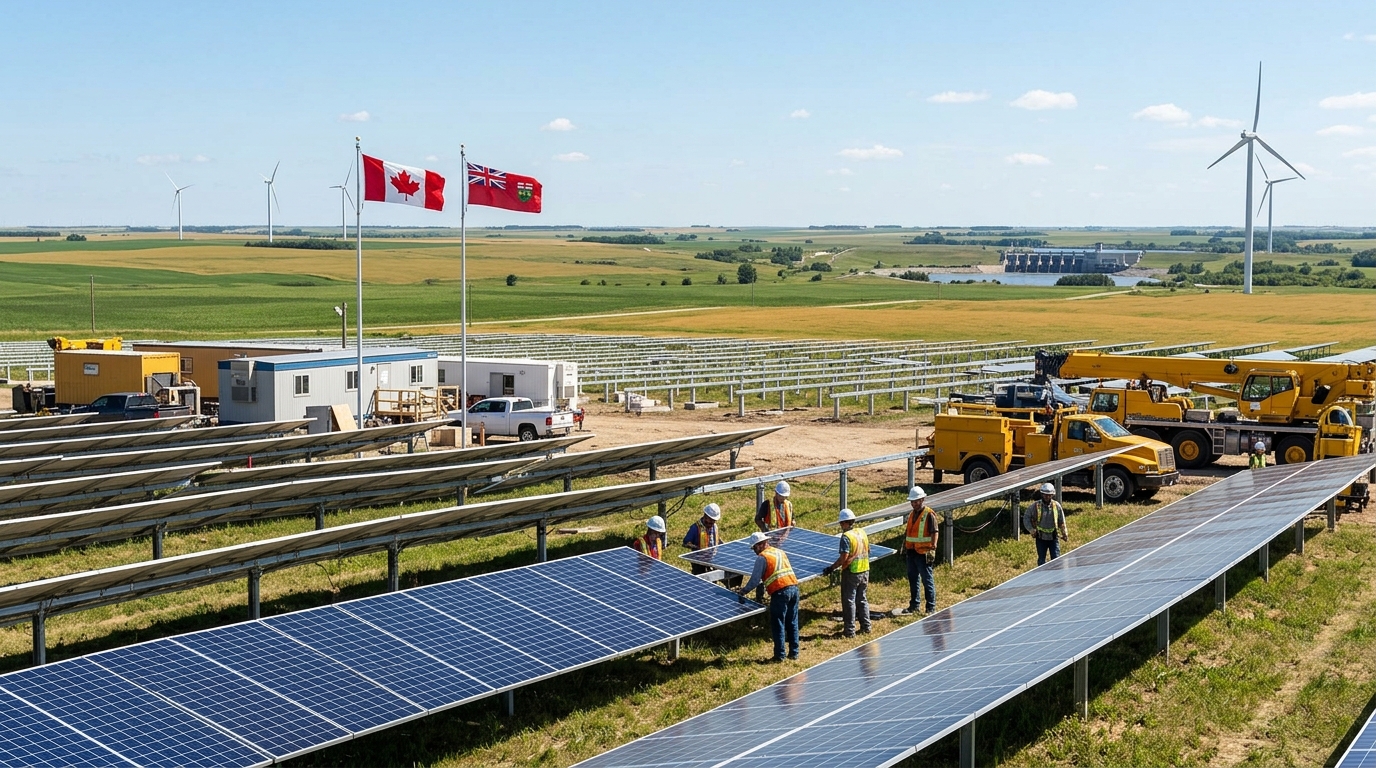
The renewable energy project will combine bifacial solar photovoltaic (PV) technology, battery storage systems, and an advanced microgrid controller to generate reliable clean electricity for the remote community. Once operational in fall 2026, the clean energy microgrid is expected to significantly reduce the community’s reliance on diesel-powered electricity generation.
For years, many northern and remote communities have depended on diesel fuel for power generation. While diesel has provided a dependable energy source, it is expensive to transport, contributes to greenhouse gas emissions, and creates long-term energy security challenges.
This new Manitoba clean energy project aims to change that reality.
Manitoba’s First Integrated Renewable Energy Microgrid
The Sayisi Dene First Nation project is being described as Manitoba’s first integrated renewable energy microgrid, making it one of the most innovative clean energy developments currently underway in Canada.
The renewable energy microgrid will integrate several technologies into a single coordinated system:
- Solar photovoltaic power generation
- Battery energy storage
- Smart microgrid management systems
- Diesel reduction technologies
- Energy optimization controls
Together, these technologies will allow the community to generate more clean electricity locally while reducing fuel consumption and lowering operating costs over time.
The project represents a major milestone for renewable energy development in Manitoba and could serve as a model for future Indigenous-led clean energy projects across Canada.
How the Clean Energy Project Will Reduce Emissions
One of the most significant benefits of the Manitoba renewable energy project is its expected environmental impact.
Federal officials estimate the renewable energy microgrid will reduce greenhouse gas emissions by approximately 500 tonnes of carbon dioxide annually once it becomes fully operational.
The reduction in diesel use will help advance Canada’s climate objectives while also supporting local sustainability goals established by Sayisi Dene First Nation.
Reducing diesel dependence has become a major priority for the Government of Canada, particularly in northern and remote communities where fuel transportation costs remain high and environmental concerns continue to grow.
The clean energy investment demonstrates how renewable energy solutions can simultaneously address environmental, economic, and energy security challenges.
Indigenous Leadership Driving Renewable Energy Innovation
A key feature of the project is that it is being led by Sayisi Dene First Nation.
Federal ministers repeatedly emphasized the importance of Indigenous leadership throughout the announcement, highlighting how Indigenous communities are increasingly leading some of Canada’s most innovative climate and clean energy initiatives.
Chief Kelly-Ann Thom Duck noted that community leaders have been involved in the renewable energy project since its earliest stages and expressed optimism about the long-term benefits the project will bring.
According to community leaders, revenue generated through solar power production will help support local priorities while strengthening long-term sustainability efforts.
The project also creates an opportunity for Sayisi Dene First Nation to share its experience with other off-grid Indigenous communities interested in developing renewable energy infrastructure.
As more First Nations pursue clean energy projects, the Sayisi Dene initiative could become a blueprint for future developments across northern Canada.
Federal Funding Breakdown for the Manitoba Clean Energy Project
The $21.6 million clean energy investment includes contributions from multiple federal programs focused on renewable energy, climate action, and Indigenous infrastructure.
Natural Resources Canada is providing:
- $10.7 million through the Clean Energy for Rural and Remote Communities (CERRC) program
- $4.2 million through the Energy Innovation Program (EIP)
Environment and Climate Change Canada is contributing:
- $6 million through the Indigenous Leadership Fund
Indigenous Services Canada is providing:
- Up to $1.47 million through Indigenous clean energy and infrastructure initiatives
The combined funding package reflects a coordinated federal effort to accelerate renewable energy deployment while supporting Indigenous economic development.
Canada’s Clean Energy Strategy Continues to Expand
The Manitoba clean energy announcement comes as Canada continues implementing its long-term electricity and climate strategies.
Natural Resources Canada’s Clean Energy for Rural and Remote Communities program has already invested approximately $453 million in projects designed to reduce fossil fuel dependence across Indigenous, rural, and remote communities.
According to federal data:
- More than 230 renewable energy projects have received support nationwide
- 82 clean energy projects are located in northern regions
- More than 67 megawatts of renewable energy capacity are expected to be added by 2027
- Annual fuel consumption is projected to decline by approximately 28 million litres
- More than 75,000 tonnes of greenhouse gas emissions could be avoided each year
These investments are helping communities strengthen local energy independence while creating new economic opportunities.
New Electricity Strategy Aims to Double Canada’s Grid Capacity
The clean energy project announcement also aligns with Canada’s newly launched national Electricity Strategy.
Introduced in May 2026, the Electricity Strategy seeks to double Canada’s electricity grid capacity by 2050 while ensuring clean, affordable, and reliable power remains available nationwide.
The federal government has begun consultations with provinces, territories, Indigenous governments, utilities, and labour organizations to identify the most effective pathways for expanding electricity infrastructure.
Projects like the Sayisi Dene renewable energy microgrid are expected to play an important role in achieving these national goals.
By integrating solar energy, battery storage, and advanced grid technologies, communities can reduce emissions while strengthening energy resilience.
Why the Manitoba Clean Energy Project Matters
The Sayisi Dene First Nation renewable energy microgrid represents far more than a local infrastructure project.
It highlights several national priorities:
- Expanding renewable energy generation
- Supporting Indigenous-led economic development
- Reducing diesel dependence in remote communities
- Strengthening Canada’s energy security
- Lowering greenhouse gas emissions
- Building climate resilience
- Creating long-term economic opportunities
As Canada works toward a net-zero economy, projects like this demonstrate how local clean energy solutions can contribute to broader national climate objectives.
A Major Step Forward for Renewable Energy in Manitoba
The $21.6 million clean energy investment in Sayisi Dene First Nation marks a significant milestone for Manitoba’s renewable energy sector and for Indigenous-led climate action across Canada.
When the renewable energy microgrid begins operating in fall 2026, it will become Manitoba’s first integrated renewable energy microgrid and one of the country’s most notable examples of Indigenous leadership in clean energy development.
For Sayisi Dene First Nation, the project promises cleaner electricity, lower long-term energy costs, and greater energy independence.
For Canada, it represents another important step toward building a cleaner, more sustainable, and more resilient energy future while demonstrating how Indigenous-led renewable energy projects can help drive the country’s transition to a low-carbon economy.