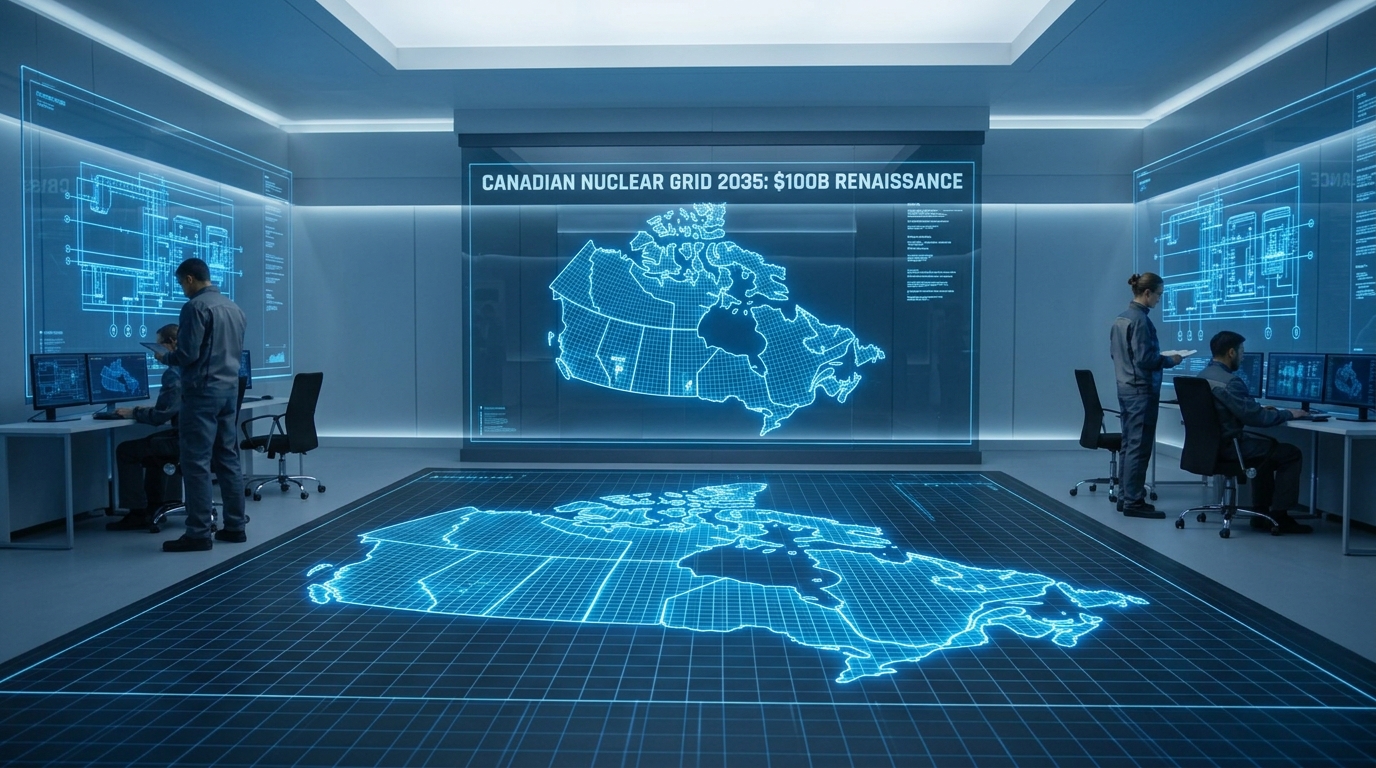
Canada is preparing for what Energy Minister Tim Hodgson is calling a historic “nuclear renaissance,” unveiling an ambitious national nuclear strategy that could transform the country’s energy future. The plan aims to build up to 10 new nuclear reactors by 2040, expand Canadian-made CANDU reactor exports, increase uranium production, and position Canada as a global nuclear energy superpower.
The new nuclear strategy represents one of the largest energy infrastructure visions proposed in decades. According to the federal government, achieving Canada’s goal of a low-carbon economy and doubling electricity generation capacity by 2050 will require a major expansion of nuclear energy alongside other clean power sources.
Speaking in Newmarket, Ontario, Tim Hodgson made it clear that nuclear energy will play a central role in Canada’s future.
“If our goal is to double our grid and build a low-carbon economy in less than 25 years, there is no credible plan to do that without nuclear energy,” Hodgson said.
The announcement immediately sparked debate among policymakers, energy experts, environmental advocates, and opposition politicians, with questions emerging about costs, timelines, funding, and public support.
Canada’s Nuclear Renaissance Could Bring Up to 10 New Nuclear Reactors
At the heart of the nuclear strategy is a plan to dramatically increase Canada’s nuclear energy capacity.
The federal government wants:
- Construction to begin on two large-scale nuclear reactors by 2035.
- Five additional reactors to be planned or under development by 2040.
- At least one reactor under construction outside Ontario by 2035.
- A Canadian-designed microreactor completed by 2035.
- Deployment of a microreactor to a remote community by the late 2030s.
If fully implemented, the strategy would result in up to 10 new nuclear reactors being built across Canada over the next 15 years.
This expansion comes as electricity demand is expected to surge due to population growth, industrial development, electric vehicle adoption, artificial intelligence infrastructure, and the electrification of major sectors of the economy.
Federal officials argue that nuclear energy provides reliable baseload electricity that renewable energy sources alone cannot consistently deliver.
Why Nuclear Energy Is Becoming Central to Canada’s Energy Future
The federal government believes nuclear energy will be essential if Canada wants to become a global energy superpower while reducing carbon emissions.
Currently, Canada operates four nuclear power plants.
Three are located in Ontario, while one operates in New Brunswick.
Together, these facilities generate approximately 15 per cent of Canada’s electricity.
However, demand for electricity is projected to grow dramatically over the coming decades.
Government officials say that without significant investment in nuclear energy, achieving climate targets and maintaining reliable electricity supplies could become increasingly difficult.
The strategy describes nuclear energy as a cornerstone of Canada’s long-term energy security.
Supporters argue that nuclear reactors can provide round-the-clock power regardless of weather conditions, making them a valuable complement to wind and solar generation.
Small Modular Reactors Remain a Key Priority
One of the most important parts of Canada’s nuclear strategy involves Small Modular Reactors (SMRs).
A major project is already underway at the Darlington nuclear site in Ontario.
The proposed facility would become the first operational small modular reactor project in the G7.
Each SMR unit could generate approximately 300 megawatts of electricity while occupying a smaller footprint than traditional reactors.
The federal government and Ontario previously committed approximately $3 billion toward advancing small modular reactor development.
Supporters believe SMRs could provide affordable electricity to remote communities, mining operations, northern regions, and industrial facilities.
Saskatchewan is also exploring plans to deploy small modular reactors by the mid-2030s.
Meanwhile, Alberta and Ottawa have agreed to collaborate on developing a strategy for future nuclear power projects in the province.
The Price Tag Could Exceed $100 Billion
While the nuclear strategy outlines ambitious goals, the biggest question remains how Canada will pay for them.
Officials from Natural Resources Canada estimate that construction of the proposed nuclear reactors could cost more than $100 billion.
That figure immediately raised concerns among critics who question whether taxpayers could ultimately be responsible for a significant portion of the bill.
The strategy itself does not provide a detailed financing roadmap.
Government officials pointed to potential funding mechanisms including:
- The Canada Growth Fund
- The Canadian Infrastructure Bank
- Private-sector investment partnerships
- Provincial government participation
- International investment opportunities
Large-scale nuclear projects are known for requiring substantial upfront investments and lengthy construction timelines.
Supporters argue that the long-term benefits of reliable electricity generation justify the costs, while critics warn that budget overruns remain a major risk.
Nuclear Strategy Could Create Tens of Thousands of New Jobs
The government says the nuclear renaissance would also generate significant employment growth.
According to Tim Hodgson, Canada’s nuclear industry currently supports roughly 90,000 jobs.
Under the new strategy, employment could exceed 180,000 jobs over the coming decades.
Those jobs would span multiple sectors, including:
- Engineering
- Construction
- Manufacturing
- Research and development
- Uranium mining
- Nuclear operations
- Supply chain management
Supporters argue that expanding Canada’s nuclear industry could create thousands of high-paying skilled jobs while strengthening domestic manufacturing capabilities.
Canada Wants to Expand CANDU Reactor Exports
Beyond building reactors at home, the federal government also wants to expand exports of Canadian nuclear technology.
The strategy places particular emphasis on growing international demand for CANDU reactors.
Currently, 30 CANDU reactors operate worldwide, including facilities in countries such as:
- South Korea
- China
- India
- Argentina
- Pakistan
- Romania
Two additional CANDU reactors are already planned.
Under the new strategy, Canada aims to enter at least four new international markets by 2040 and engage six to ten emerging nuclear countries over the next 15 years.
Officials believe reactor exports can strengthen Canada’s global influence while creating long-term economic opportunities.
The strategy notes that nuclear partnerships often last for decades, creating ongoing economic, diplomatic, and strategic relationships between countries.
Uranium Exports Could Double Under New Nuclear Plan
Another major objective of the strategy involves increasing uranium exports.
Canada already ranks among the world’s leading uranium producers.
As countries seek alternatives to Russian nuclear fuel supplies, Ottawa sees an opportunity to become a more important global supplier.
Unlike many reactor designs, CANDU reactors do not require enriched uranium.
However, the strategy also suggests Canada may need to examine expanding domestic uranium enrichment capabilities if international demand shifts toward other reactor technologies.
Officials argue that strengthening uranium production could reinforce Canada’s position in global energy markets while supporting allied nations seeking secure fuel supplies.
Pierre Poilievre Questions Whether the Plan Will Deliver Results
Not everyone is convinced that the strategy will succeed.
Conservative Leader Pierre Poilievre responded cautiously to the announcement, arguing that government announcements do not automatically translate into completed projects.
According to Poilievre, Canadians should focus on actual construction and completed infrastructure rather than future promises.
He also criticized regulatory processes that he believes have slowed energy development projects across the country.
Poilievre stated that Canada needs fewer obstacles and faster approvals if it hopes to build more affordable and abundant energy infrastructure.
His comments highlight the political debate likely to continue as the strategy moves from planning to implementation.
Mark Carney’s Ethics Screen and Nuclear Competition
The strategy also attracted attention because of Prime Minister Mark Carney and his ethics arrangements.
Government officials emphasized that Carney did not participate in developing the nuclear strategy.
According to officials, the prime minister was not shown the document because of an ethics screen related to previous holdings connected to Brookfield entities.
The issue has drawn scrutiny because CANDU technology competes with another reactor design associated with business interests linked to Brookfield.
Officials maintain that the ethics screen was designed to prevent conflicts of interest and ensure decision-making remained independent.
Can Canada Become a Global Nuclear Energy Superpower?
The government’s nuclear renaissance strategy represents one of the most ambitious energy plans in modern Canadian history.
If successful, the initiative could reshape Canada’s electricity system, create tens of thousands of jobs, boost uranium exports, expand CANDU reactor sales, and strengthen the country’s role in global energy markets.
However, significant challenges remain.
Funding more than $100 billion in nuclear projects, securing public support, obtaining regulatory approvals, managing environmental concerns, and delivering projects on schedule will require unprecedented coordination between federal and provincial governments.
For now, the message from Ottawa is clear.
Canada is betting heavily on nuclear energy as it seeks to double electricity production, achieve climate goals, strengthen energy security, and establish itself as a leading global nuclear power.
Whether this nuclear renaissance becomes reality or remains an ambitious vision will depend on what happens over the next decade as reactors move from policy documents to construction sites across the country.