Toronto continues to strengthen its position as a North American leader in urban sustainability through its Eco-Roof Incentive Program, a city initiative designed to encourage the installation of green roofs and cool roofs on homes, businesses, institutions, and other buildings. The program provides financial incentives that help property owners reduce environmental impacts while contributing to a more climate-resilient urban landscape.
As cities face increasing challenges from extreme heat, stormwater management pressures, and greenhouse gas emissions, Toronto’s investment in eco-roof technologies is becoming an increasingly important component of its broader environmental strategy.
Funding Available for Green and Cool Roof Projects
The Eco-Roof Incentive Program offers substantial financial support to eligible property owners who choose to install environmentally beneficial roofing systems.
Under the current program structure, green roof projects can receive funding of up to $100 per square metre of vegetated roof area, with a maximum grant of $100,000 per project. Existing buildings may also qualify for a Structural Assessment Grant of up to $1,000 to help determine whether a building can safely support a green roof installation.
Cool roof projects are also eligible for incentives. Property owners can receive up to $5 per square metre for cool roofs installed with a new membrane and up to $2 per square metre for reflective coatings applied to existing roofs, with funding capped at $50,000 per project.
Applications are accepted year-round and must be approved before construction begins. Projects that have already started may not qualify for funding.
Understanding Eco-Roofs
What Is a Green Roof?
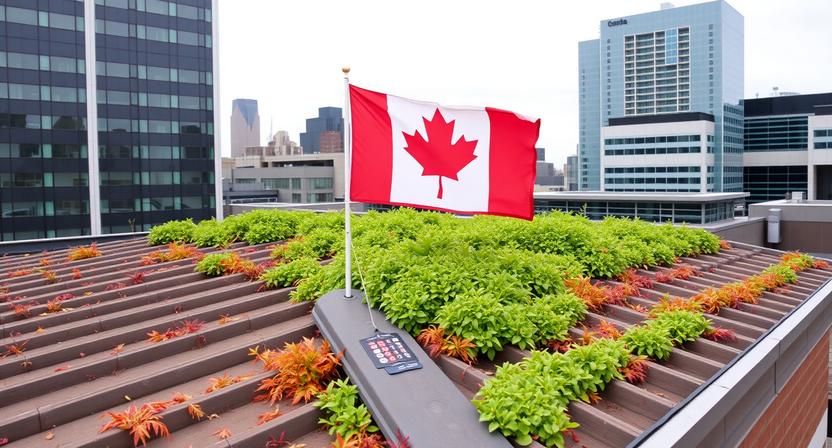
A green roof, often referred to as a living roof, consists of vegetation planted over a specially designed roofing system that includes waterproofing, drainage layers, growing medium, and plants.
Toronto’s Green Roof Construction Standard establishes requirements for the design, construction, and maintenance of these systems to ensure long-term performance and environmental benefits.
Green roofs can be installed on a wide variety of structures and may range from simple low-maintenance systems to larger rooftop gardens that support diverse plant communities and recreational spaces.
What Is a Cool Roof?
A cool roof uses highly reflective materials that reduce heat absorption and lower roof surface temperatures. These systems help buildings remain cooler during hot weather, reducing energy consumption and easing pressure on urban cooling systems.
Cool roofs can be created through reflective membranes or specialized coatings applied over existing roofing materials.
Environmental Benefits Driving Toronto’s Investment
Reducing Urban Heat
One of the most significant advantages of eco-roofs is their ability to combat the urban heat island effect. Traditional rooftops absorb and retain heat, contributing to higher temperatures in densely developed areas.
Green roofs cool the surrounding environment through vegetation and evapotranspiration, while cool roofs reflect solar radiation away from buildings. Together, these technologies help lower temperatures across neighborhoods and improve comfort during heat waves.
Research associated with Toronto’s green roof initiatives suggests widespread adoption could reduce local temperatures and create measurable cooling effects throughout the city.
Managing Stormwater More Effectively
Stormwater management remains a major challenge for large urban centres. Heavy rainfall can overwhelm sewer systems, increase flooding risks, and affect local waterways.
Green roofs absorb and retain significant amounts of rainfall before it reaches municipal drainage infrastructure. This reduces runoff volumes and helps alleviate pressure on sewer networks during major storm events.
Program-supported projects have collectively diverted millions of litres of stormwater from Toronto’s sewer system each year, demonstrating the role green infrastructure can play in modern urban planning.
Supporting Biodiversity
Green roofs create valuable habitat in highly urbanized environments. Native plants, pollinators, birds, and other wildlife can benefit from rooftop ecosystems that would otherwise be unavailable within dense city centres.
These spaces contribute to biodiversity conservation while helping reconnect fragmented urban habitats.
Lowering Energy Use and Emissions
Eco-roofs can improve building energy performance by reducing heating and cooling demands throughout the year.
Green roofs provide insulation that helps stabilize indoor temperatures, while cool roofs reflect sunlight and reduce summer heat gain. These effects can lower energy consumption, decrease operating costs, and reduce greenhouse gas emissions associated with building operations.
A Program Backed by Toronto’s Green Roof Leadership
Toronto became the first city in North America to adopt a comprehensive Green Roof Bylaw, requiring many new developments to include green roof coverage. The Eco-Roof Incentive Program was introduced alongside this regulatory framework in 2009 to encourage voluntary installations on eligible buildings not subject to mandatory requirements.
Funding for the program is supported in part through payments collected under the city’s Green Roof Bylaw, creating a self-sustaining mechanism that reinvests resources into environmental improvements across Toronto.
Measuring the Program’s Impact
Since its launch, the Eco-Roof Incentive Program has supported hundreds of projects throughout Toronto and helped create extensive new green and reflective roof space across the city. Program-supported installations have contributed to reductions in stormwater runoff, greenhouse gas emissions, and building energy consumption while expanding urban green infrastructure.
City data and program reporting indicate that eco-roof projects have generated substantial environmental benefits, including annual energy savings, reduced emissions, increased green space, and improvements in climate resilience.
Eligibility and Application Requirements
The program is available to many existing residential, commercial, industrial, and institutional properties located within Toronto. Certain new developments may also qualify, depending on building size and regulatory requirements.
To receive funding, applicants must ensure that projects meet the Toronto Green Roof Construction Standard and all applicable building regulations. Documentation such as design plans, maintenance strategies, and structural assessments may be required during the application process.
Applicants are encouraged to seek approval before beginning construction to ensure eligibility for available grants.
Related: Canada Invests Over $4 Million in 12 New Nature Restoration and Conservation Projects
Looking Ahead
As climate adaptation becomes an increasingly important priority for cities worldwide, Toronto’s Eco-Roof Incentive Program continues to serve as a model for integrating environmental policy with practical financial support. By helping property owners invest in green roofs and cool roofs, the city is creating infrastructure that delivers long-term environmental, economic, and community benefits.
From reducing urban heat and managing stormwater to supporting biodiversity and cutting energy consumption, eco-roofs are transforming rooftops into valuable assets that contribute to a healthier and more sustainable future for Toronto.