A major renewable energy proposal in southeastern New Brunswick could dramatically reshape the province’s clean electricity landscape. The planned Cookville Solar Project, located near the municipality of Tantramar, aims to generate up to 150 megawatts of solar power, making it one of the largest solar developments ever proposed in Atlantic Canada.
If completed, the project would dwarf previous solar initiatives in New Brunswick and rank among the biggest utility-scale solar farms in the country. Developers say the facility could generate enough electricity annually to power approximately 12,500 homes while producing no greenhouse gas emissions during operation.
A Solar Project on an Unprecedented Scale for New Brunswick
The Cookville Solar Project is being developed through a partnership between the North Shore Mi’kmaq Tribal Council and renewable energy company BNRG Renewables, headquartered in Ireland. Their collaboration began following an agreement signed during the Atlantic Indigenous-Led Energy Symposium in Fredericton in 2024.
The scale of the proposed development is significant not only for New Brunswick but also nationally. Industry experts say that if the facility were operational today, it would likely rank as Canada’s second-largest solar farm by generating capacity.
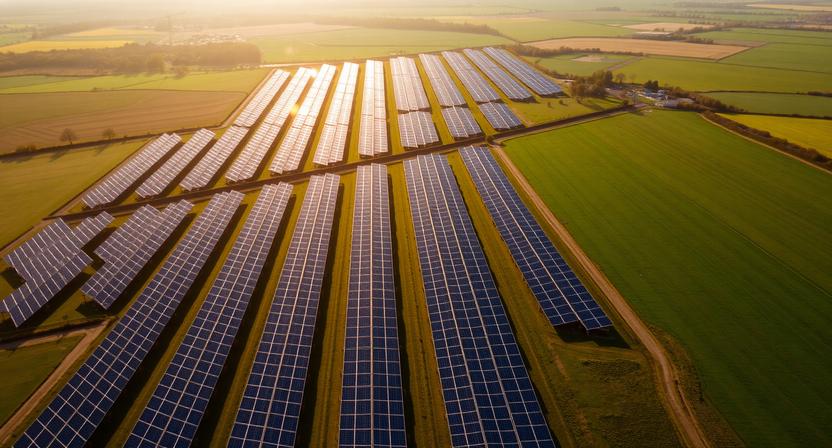
The project is expected to include more than 340,000 solar panels spread across a vast rural site covering approximately 400 hectares. Most of the land involved is currently used for agricultural purposes and is owned by the Acton family, long-time farmers in the region.
Where the Project Would Be Built
The proposed solar farm would be located in Cookville, roughly 15 kilometres north of Sackville and within the municipality of Tantramar.
The site stretches across a broad rural landscape extending nearly three kilometres from north to south and about two kilometres east to west. According to project documentation, the area consists largely of partially developed farmland with limited wooded sections.
The location also places the solar project near another high-profile energy proposal in the province: the controversial Tantramar gas and diesel generating station planned by NB Power several kilometres away.
Developers say the selected location offers suitable access to existing transmission infrastructure, which is essential for connecting a project of this size to the provincial electrical grid.
Hundreds of Thousands of Solar Panels Planned
Environmental filings submitted to provincial authorities outline a massive solar installation covering around three-quarters of the total property area.
The approximately 340,000 panels would occupy close to 740 acres of land. Supporting infrastructure would also be constructed, including:
Electrical Substation
An electrical substation is planned near the southern section of the site where existing NB Power transmission lines cross the property.
Communications Tower
The proposal also includes a communications tower necessary for monitoring and operating the facility efficiently.
Internal Access Roads
New internal roadways and operational infrastructure would be required throughout the site to support maintenance and construction activities.
Farming Activities Would Continue Alongside Solar Operations
One feature developers emphasize is the project’s compatibility with agriculture.
According to project materials, farming activities are expected to continue even after solar infrastructure is installed. Planned agricultural uses include sheep grazing, blueberry cultivation and honey production beneath and around the solar panels.
This approach, often referred to as agrivoltaics, is becoming increasingly common in large-scale solar developments. Supporters argue it allows landowners to maintain agricultural productivity while simultaneously generating renewable energy.
Construction Could Begin Within the Next Few Years
The project remains in the environmental assessment phase, but preliminary timelines indicate construction could take between 18 and 24 months once approvals are secured.
Developers are targeting completion by mid-2029.
Once operational, the solar farm is expected to produce renewable electricity for approximately 40 years before eventually being decommissioned.
Provincial environmental review details are available through the Government of New Brunswick environmental assessment registry:
Government of New Brunswick Environmental Impact Assessment Registry
NB Power Has Not Yet Signed a Purchase Agreement
Although the solar project has been proposed for connection to the provincial power grid, NB Power has not yet confirmed an agreement to purchase electricity from the facility.
The utility has been seeking additional renewable energy sources as part of broader provincial electricity planning.
In 2024, NB Power launched a request for proposals seeking up to 400 megawatts of renewable energy generation. Later that year, the utility awarded a 200-megawatt agreement to the Brighton Mountain Wind project.
Information on renewable energy initiatives and procurement programs can be found through:
NB Power Renewable Energy Information
One of Canada’s Largest Solar Farms
Canada has seen rapid growth in utility-scale solar developments over the last decade, particularly in Alberta and Ontario.
Several Ontario solar facilities already exceed 100 megawatts in capacity, while Alberta is home to the country’s current largest solar operation, the Travers Solar Project.
Industry representatives say projects like Cookville signal that Atlantic Canada may soon play a larger role in national renewable energy production.
Supporters argue large solar farms can help provinces diversify electricity supplies, reduce dependence on fossil fuels and strengthen long-term energy security.
Federal information about Canada’s renewable energy transition and clean electricity goals is available through:
Government of Canada Clean Electricity Regulations and Renewable Energy Information
Public Reaction May Shape the Project’s Future
Large-scale solar developments often generate mixed reactions from nearby communities. While many residents support renewable energy expansion, others raise concerns about land use, visibility and environmental impacts.
Developers behind the Cookville Solar Project have announced plans for a public open house where residents can ask questions and review project details.
Energy experts note that solar projects are increasingly being viewed as a long-term agricultural and economic land use rather than simply industrial infrastructure.
As New Brunswick continues exploring new energy options, the Cookville proposal may become one of the province’s most closely watched renewable energy developments in the coming years.